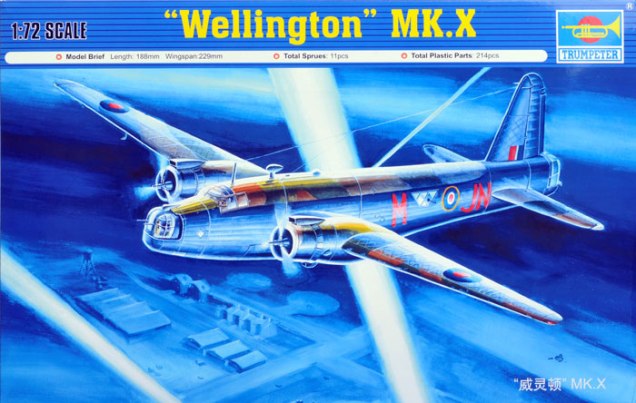
This is KW-W at Dishforth most probably before 425 Squadron will leave for North Africa in 1943. We can see the air filter on top of the right engine. So I figure this is a Wellington Mk X and not a Mk III.
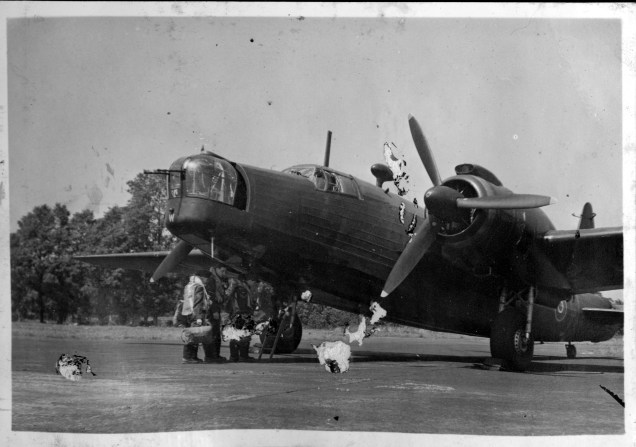
Collection Réal St-Amour courtesy Chantal St-Amour
That photo was part of Réal St-Amour’s collection. Réal St-Amour was the Alouette’s adjutant from 1944 to 1945.
These next photos are from the collection of Roly Leblanc, courtesy of his son Michael. Michael had shared them back in 2011. His father was a ground crew and he took lots of pictures of Kairouan.
We have a good idea of how were the living conditions for Roly Leblanc in North Africa in 1943.
This was taken from Gabriel Taschereau’s memoirs
“At noontime, the thermometer reached 130 ° F and even 140 ° F… “
Group Captain Gabriel Taschereau, D.F.C., C.D., A.D.C.
All crews were equipped with new aircraft, Wellington Mk Xs, especially adapted to face the tropical climate. After a remarkable war effort during its stay in Dishforth, Yorkshire, 425 Squadron was transferred to North Africa in the spring of 1943 to write the second chapter of its brilliant epic.

With few exceptions, airmen who already had more than twenty bombing missions to their credit were assigned to other Canadian squadrons residing in England. Those who insisted on following their squadron to Africa were informed that they would have to complete at least twenty other raids before being repatriated. This was the case for many.
Shortly before the big departure, the two deputy commanders, squadron leaders Georges Roy and Logan Savard, were promoted to the rank of Wing Commander and each were appointed to head a new squadron. All the crews equipped Wellington Mk Xs would be assigned in Tunisia, a desert location about thirty miles southwest of Kairouan, between two Arab villages called Pavillier and Ben-Zina.

Collection Roly Leblanc courtesy Michael Leblanc
The journey was made in several stages: Dishforth, Portreath, Gibraltar, Fez (Morocco), Telergma (Algeria), and finally the new base named Pavillier-Zina. From that time on, 425 Squadron became part of 331 Wing, part of the 205 Group of the North-West African Strategical Air Force.
This arrival on foreign soil was not without some inconvenience: no vegetation, no buildings; therefore, no shade to protect oneself from the rays of a blazing sun; sand and dust; flies, scorpions, tarantulas and mosquitoes.

Collection Roly Leblanc courtesy Michael Leblanc
These last insects being carriers of malaria, we had to swallow one quinine tablet per day, as a preventive measure. Moreover, as water is a scarce commodity, it was distributed sparingly, especially since it had to be collected in a tanker truck from a well located about ten kilometres from the camp. And one day, the attendants of this service came back empty-handed, mentioning that the well was dry, and that the body of an old mule had been discovered at the bottom.
Gone are the relative luxury of Dishforth’s mess, with its clean rooms and pleasant mess the facilities in Kairouan were rather rudimentary.


Collection Roly Leblanc courtesy Michael Leblanc
Nevertheless, the morale of the troops remained high. Enthusiasm reigned at all levels. Under the command of the wing commander Bill St-Pierre, and his new deputies, the leading squadron leaders Claude Hébert and Baxter Richer, air operations against the enemy resumed more successfully, but under radically different conditions than those we had experienced at Dishforth. German fighters were still on the lookout, but were fewer in number; the A.A. guns and less threatening beams of spotlights. And we no longer had to face the formidable enemy that was icing. On the other hand, our engines often tended to heat up, which was not very reassuring.
In terms of comfort, it was neither the Ritz nor the Savoy. No more the relative luxury of Dishforth’s mess, with its clean rooms and well-stocked dining room; absent, the kind and dedicated “batwomen”, the angels of the W.A.A.F.; become chimeric the “pubcrawling” tours to Ripon Boroughbridge, Harrogate and York.

Collection Roly Leblanc courtesy Michael Leblanc
If the evening and night brought us a diversion in the form of bombing missions, the day, however, seemed endless. The only place we could relax a little was in the shade of our aircraft wings, because in our tents the heat was simply stifling. At lunchtime, the thermometer reached 130° and even 140° Fahrenheit, which allowed us to easily cook an occasional egg on a sheet of metal exposed to the sun. Another cause for celebration: the menu. At breakfast, we had “corned beef”; at lunch, more “corned beef”; and in the evening, to make a change always from “corned beef”.

Collection Roly Leblanc courtesy Michael Leblanc
To compensate for this lack of diet, some crews, during their N.F.T. (daily test flight), managed to simulate an engine failure near a U.S. Air Force base at lunchtime. We were then invited by our American colleagues to share their feast: a four-course meal, with beer, tea, coffee, fresh lemonade, ice cream, etc., etc. Thus, well fed and our engines rested, we took off again to return to our base, filled with the euphoric optimism of our twenties.
Our military objectives varied with the advance of infantry forces. Before the landing on July 9, we attacked by night the aerodromes of Catania, Messina and Gerbini, the fortified squares such as Sciacca and Enna, as well as the banks of the Strait of Messina. Later, after the invasion itself, our targets gradually moved up along the Italian boot. Thus, Reggio, Naples, Capodichino, Salerno, Scaletta, Avellino, Montecorvino, Aversa, Formia, Grazziani, Cerveteri and many other towns, seaports or yards were repeatedly attacked by the 425 Squadron Wellingtons.

Collection Roly Leblanc courtesy Michael Leblanc
The successes achieved by aircrew were largely the result of the close collaboration between “pigeons” and “penguins”. All these brave mechanics, gunsmiths, electricians, drivers, technicians of all kinds, under the expert guidance of flight Lieutenant Hilaire Roberge, never spared their time or effort to make sure the impeccable maintenance of the aircraft entrusted to them.

Collection Roly Leblanc courtesy Michael Leblanc
The administrative services, under the skilful direction of flight lieutenant Edmond Danis, were also always impeccable. Despite our isolation, and the difficulties of communication, our friendly Warrant Officer has constantly managed to manoeuvre to make sure the smooth running of the squadron’s machinery.
On the spiritual side, it was our devoted padre, Father Maurice Laplante, who was very successful in ensuring divine protection on his swarthy flock. He celebrated daily mass in the shelter of a “marquise”, and regularly blessed the planes leaving for their destiny.
Regarding the physical health of our troops, we have nothing but praise for our medical service. This service was run by Dr. Hector Payette, the “little doc”, who, despite his small size, has always been able to rise to the occasion. He was the one who managed to cure us of dysentery that affected us all at first, by feeding us castor oil through a funnel placed in his patients’ mouths. He was also responsible for administering quinine and atabrine tablets for malaria, and “mottons” of salt to combat water loss through sweat. And how many cases of sunstroke has he been called upon to treat! Not to mention the care of the wounded, as was the case for Sergeant Léon Roberge, a wireless operator who returned from a raid with a shrapnel in his thigh and machine gun bullets in his calves, following an unexpected encounter with a Junkers 88.
After a six-month stay under the burning sky of southern Tunisia, the squadron returned to England. But before we could enjoy a well-deserved vacation, we had to undergo a delousing cure in a hospital in West Kirby, to get rid of the sand fleas brought back from Africa, which had made their home between the dermis and the epidermis of each of us.
Most of the “navigators” were later directed to the O.T.U. (operational training schools) to serve as instructors, sharing their experience and knowledge with fresh crews from Canada. These new crews, once their internship in O.T.U. was completed, joined the sedentary services already installed at their new base in Tholthorpe, to begin the third phase of the epic history of 425 Squadron of the Royal Canadian Air Force.



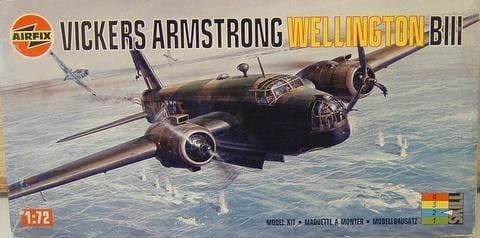

 My Forgotten Hobby III