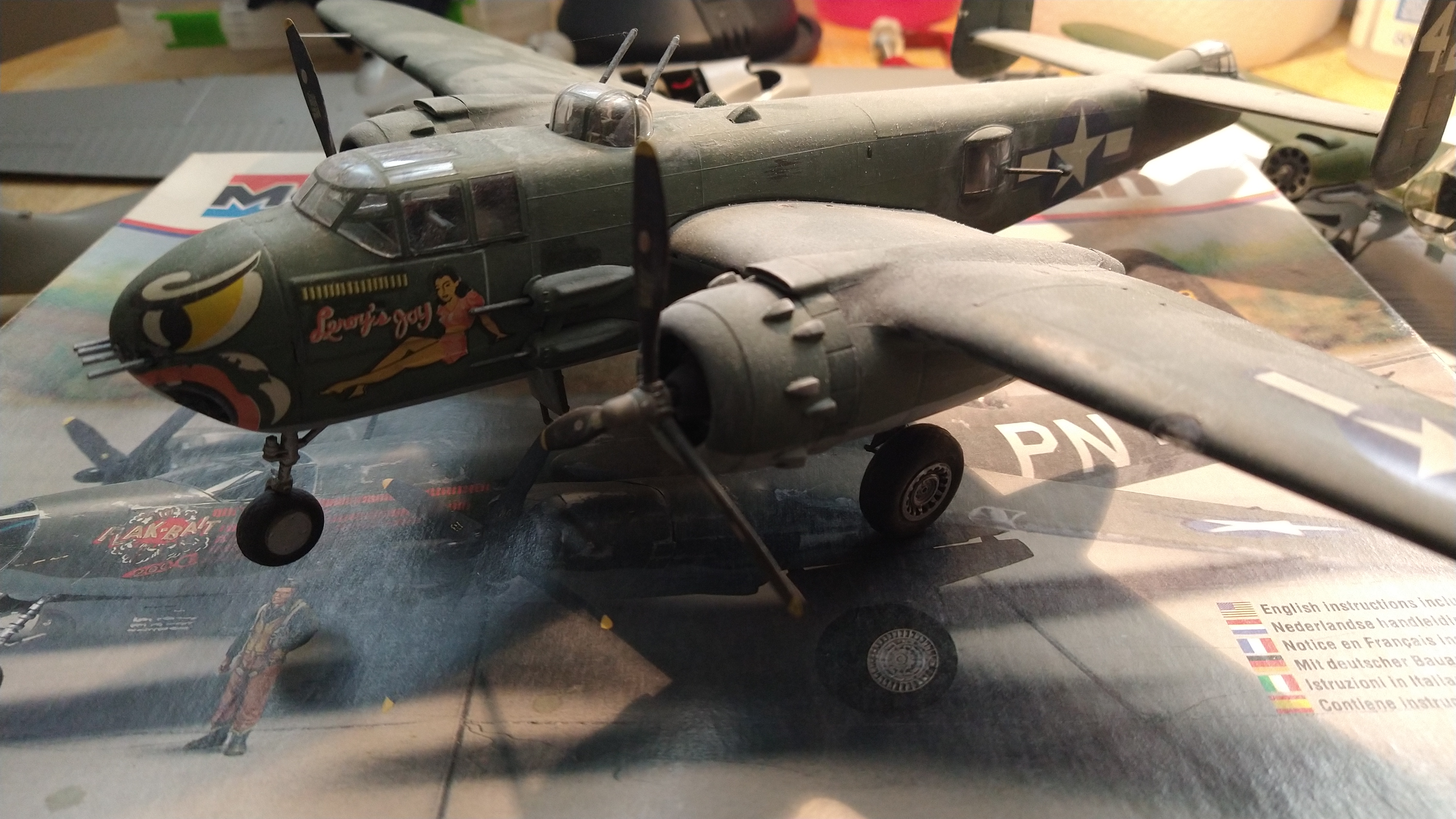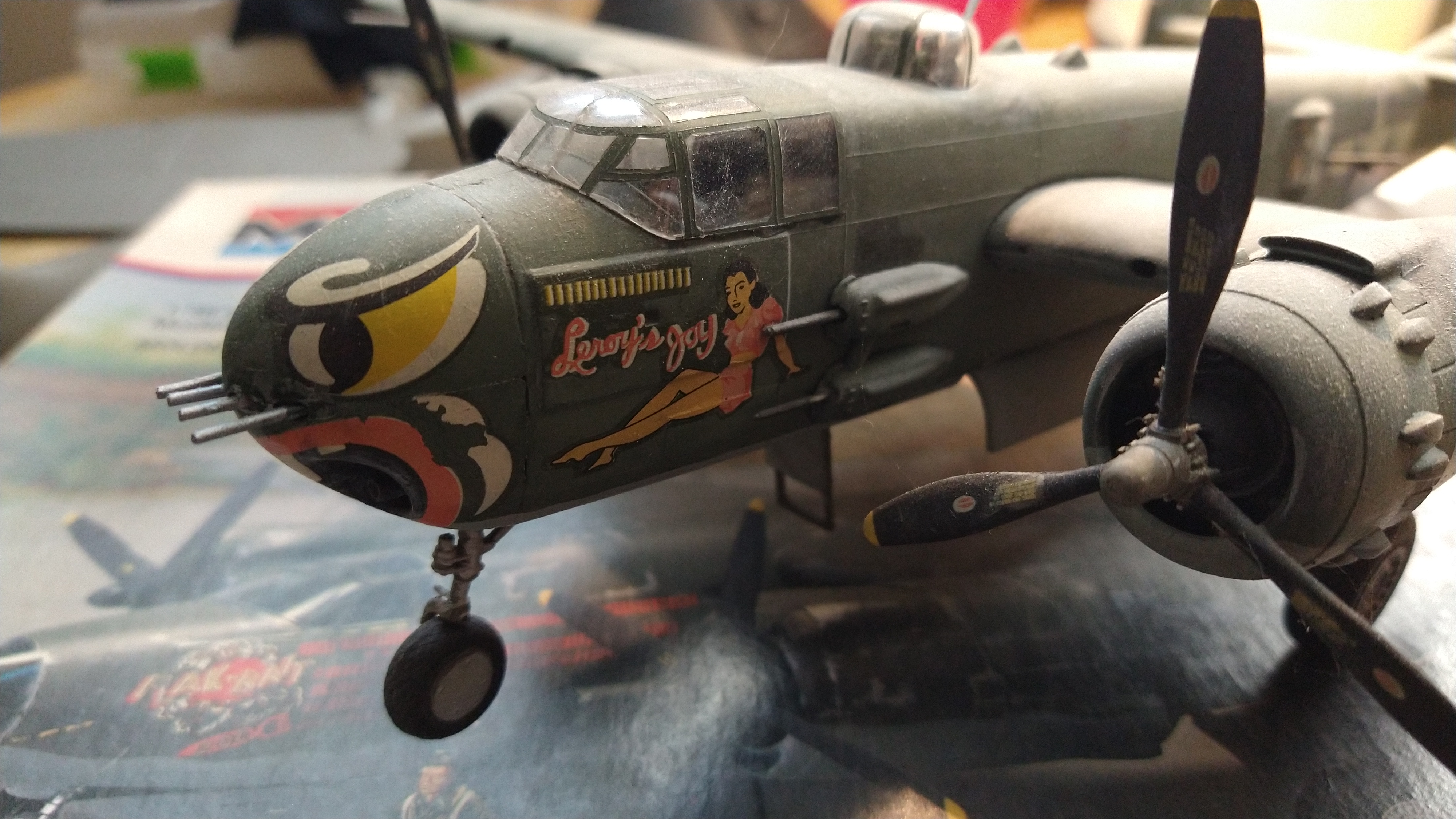
Monogram Martin B-26 Marauder – First Steps

Reading this review was most helpful.

https://modelingmadness.com/review/allies/us/kolb26.htm

I know what to expect.

wp-1626289732649

I have decided to stop procrastinating and start this new project right away.

wp-1628530157554..jpg

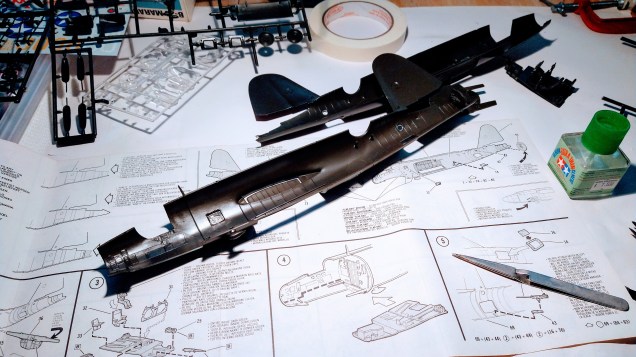
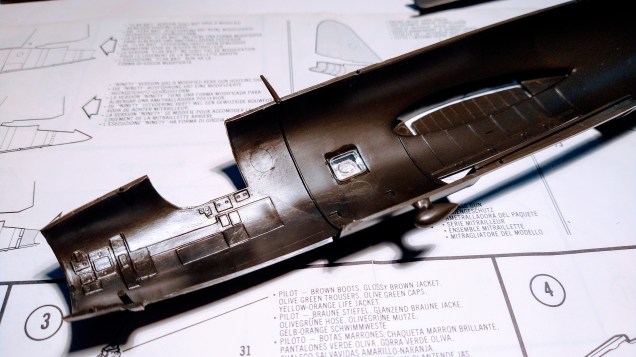
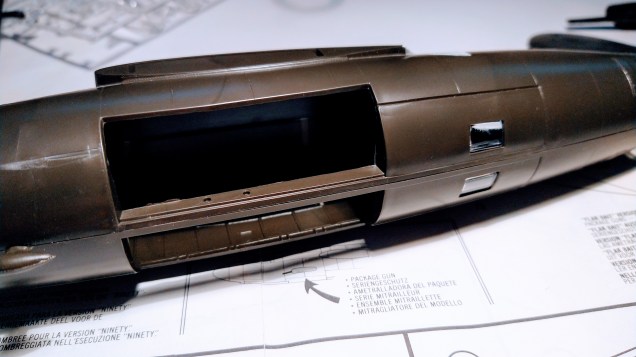
I proceeded with step 1 and glued all the small windows.

wp-1628530157323..jpg

A closer look…

IMG_20210808_155613384~2

IMG_20210808_155431798~2

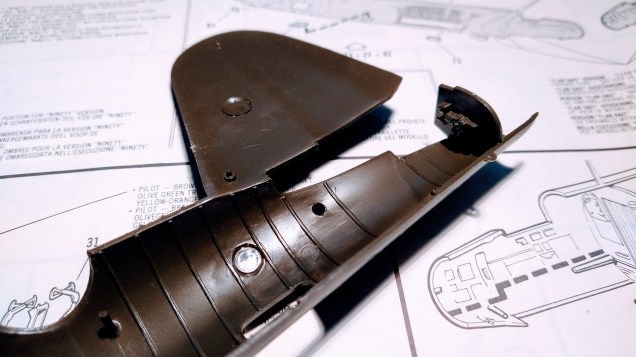
They are pretty tricky.

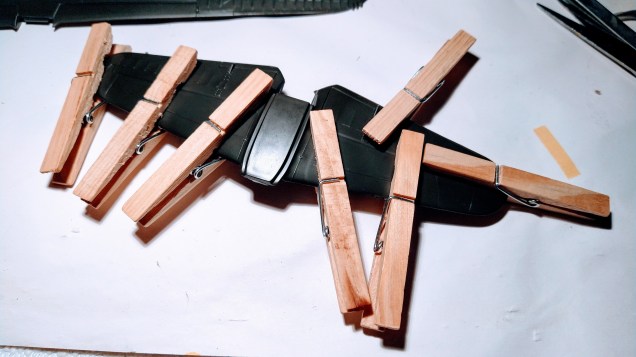
I glued the tail turret bulkhead and clamped the fuselage halves to insure a proper alignment.

IMG_20210808_155556619~2

IMG_20210808_155451248~2

Then came the fuselage bulkheads assembly.

IMG_20210809_063938737~2

Again clamping the fuselage halves for proper alignment.

IMG_20210808_151526596~4

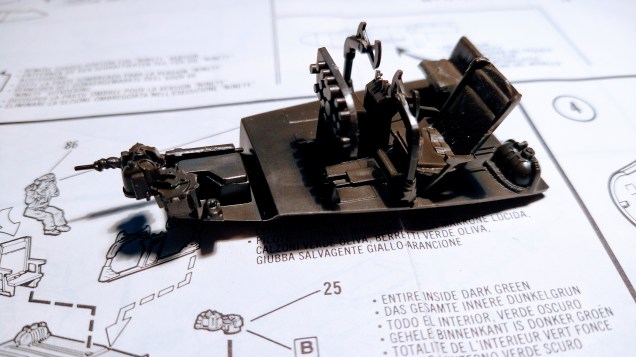
The cockpit assembly came next.

IMG_20210809_063531933~2

Instructions for positioning the Norden were vague.

IMG_20210808_155411266~2

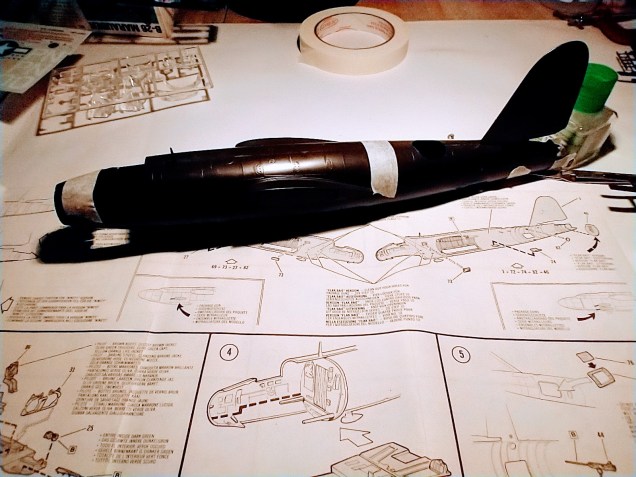
I did lots of dry fitting to make sure the fuselage halves would fit right.

IMG_20210809_064356687~2

I then proceeded with more steps.

The elevators…

IMG_20210809_063636360~2

IMG_20210809_063700742~2

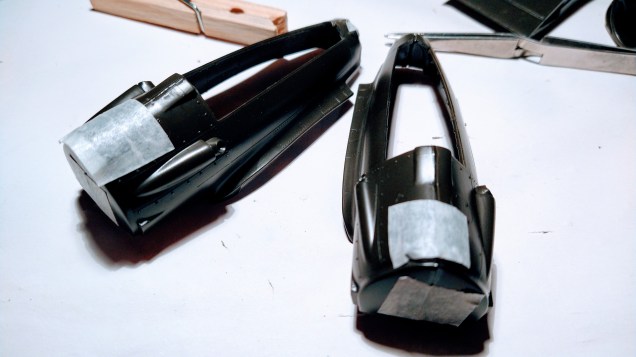
The nacelles were hard to assemble and I had to spend quite a long time figuring how to glue them so they would fit properly later on.

IMG_20210809_063516700~2

Remembering how terrible the fit is according to Plane Dave, I took the time to assemble them.

I sure am looking forward for the next steps.

Plane Dave’s B-26

I was sure Plane Dave had tackled Monogram’s B-26.

He posted this seven years ago…

https://planedave.net/2014/07/06/martin-b-26c-marauder/

img_8077.jpg

Excerpt

This example is from the Monogram kit with PYN-up decals. This is truly a vintage kit. I remember being awed by its level of detail when I was a kid. It still holds up pretty well in that regard, certainly it has as much detail as anyone will ever see through those tiny windows! But wow is the fit terrible. Okay, maybe not the worst I’ve seen; but between the fact older kit tolerances aren’t what we expect from a modern tool, and this particular molding has been used many, many times, this really requires a lot of work to bring together. Especially in the area of the cowlings and nacelles. I used a lot of filler, and many hours sanding. I think it was worth it though, I’m pretty happy with how it came out.

I just can’t wait building it.

wp-1628530157554..jpg

Monogram Martin B-26 Marauder – Out of box

I had made my decision to build the B-26 as if I was building it in 1978. I wish I had told my readers about it.

I got this comment which was warning me not to build Suzie Q using Monogram’s B-26.

wp-1626289732649

Unfortunately, you cannot get there from here with the Monogram kit. The kit is a B-26B/C, very different from the B-26A. The A model has smaller tail feathers, a completely different rear gun position from anything in the kit, the wings are four feet less in span (and you can’t just cut off the tips) and the engine cowlings are completely different. There’s also some big differences around the nose.

Mike West makes a resin conversion kit that provides a different rear fuselage with the correct gun position, different tail, outer wings (from the engine nacelle out), different cowlings, and a resin nose. Unfortunately, due to family medical problems, he has closed Lone Star Models and isn’t producing things right now. He has announced he will re-open in September, but from what he told me in a recent e-mail, that is now « iffy » due to the continuing medical problem in the family.

The best thing to do is what I have done: set the kit aside until he reopens and you can get the resin set, or decide to do one of the many colorful B-26B/C Marauders for which there are lots of decals availabile at eBay for this out-of-production kit.

But trust me, neither you nor anyone else has the skills to just modify the kit to get to a B-26A. You’re talking about half the model being replaced with scratchbuilding. You really cannot get there from here and you’re wasting your time to try, I know whereof I speak.

I won’t be starting this new project right away, but I think I have made a wise decision to go out of box, to pause for awhile, and read some reviews like the one down below.

https://modelingmadness.com/review/allies/us/kolb26.htm

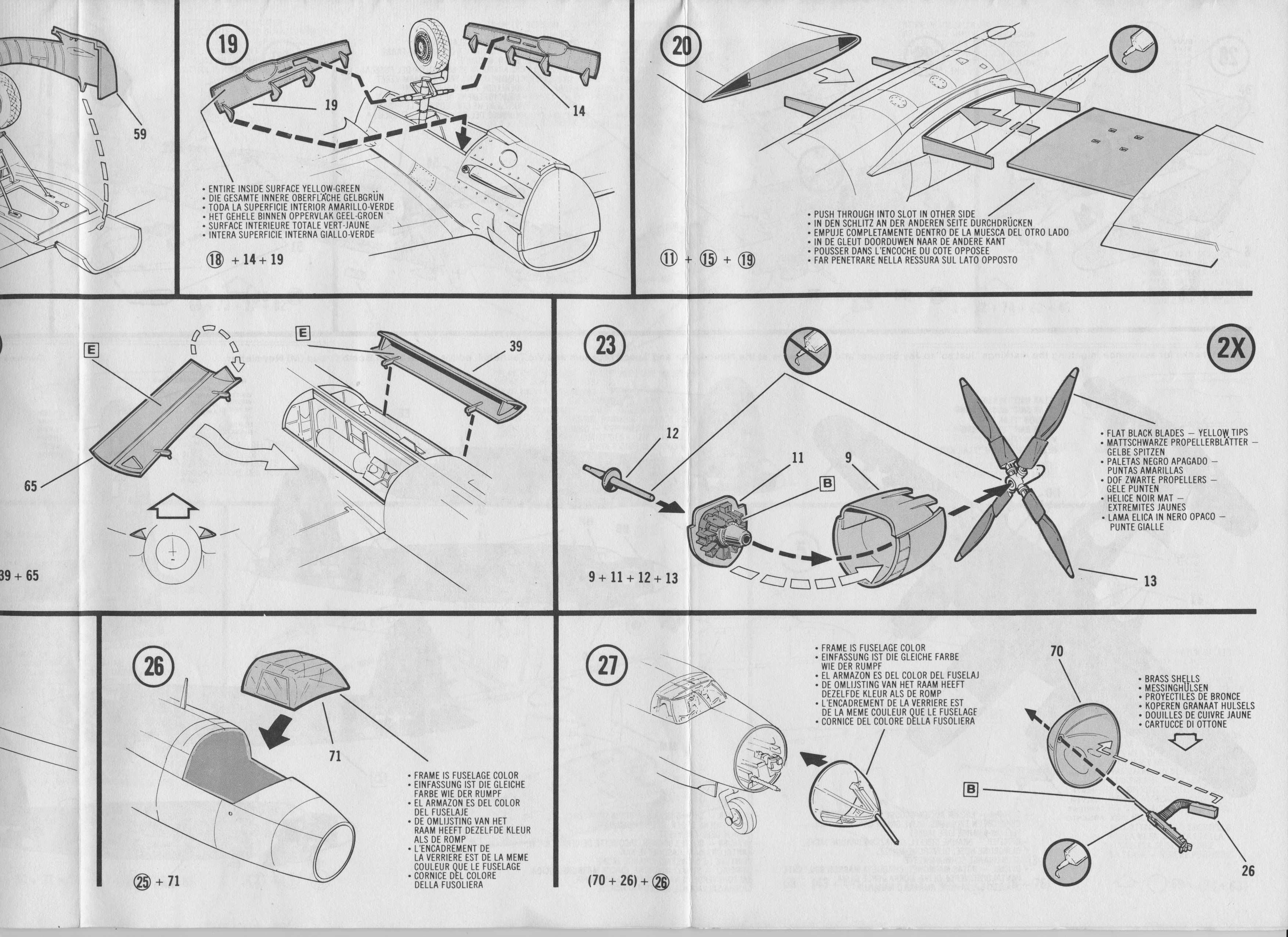
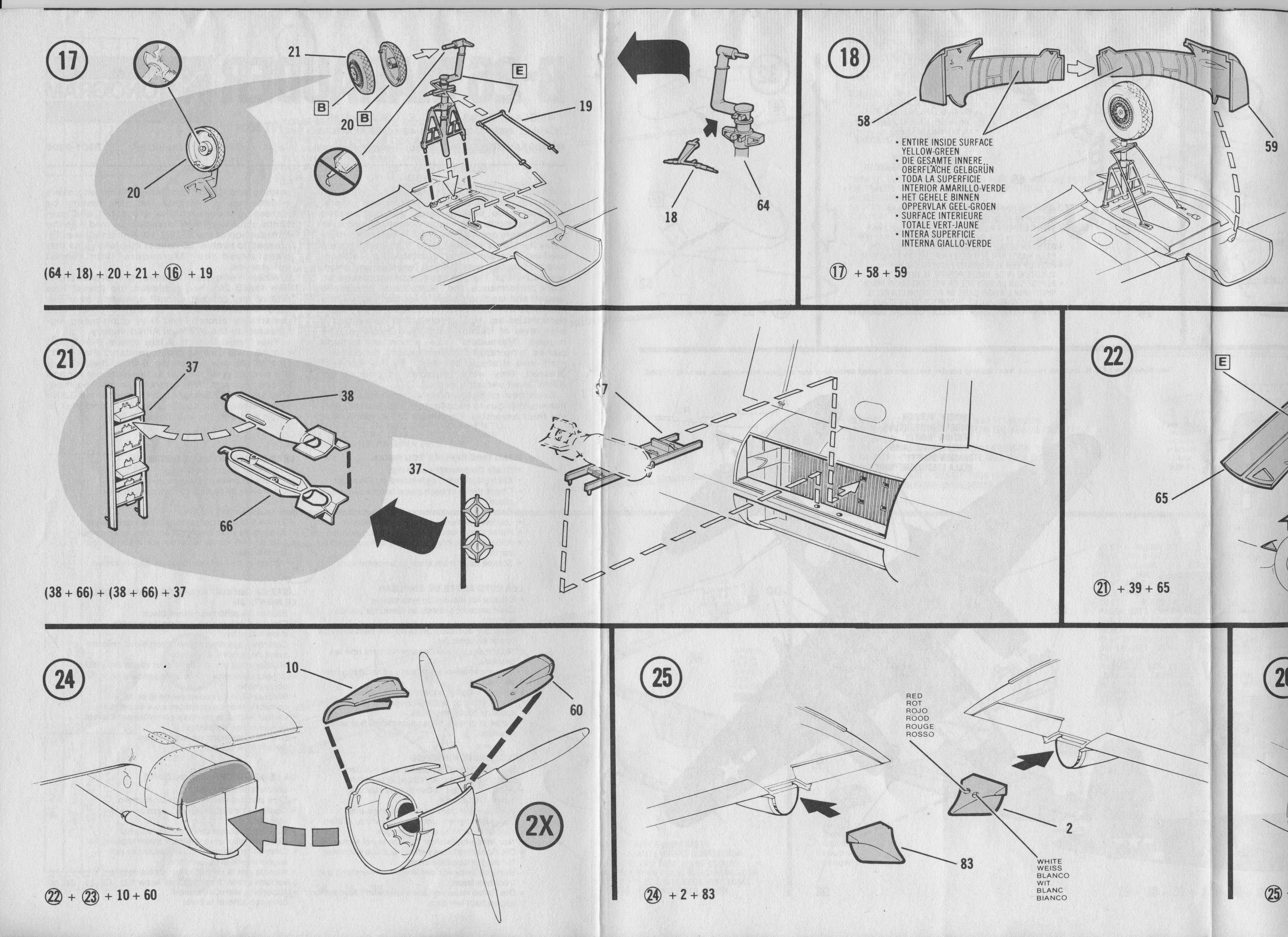
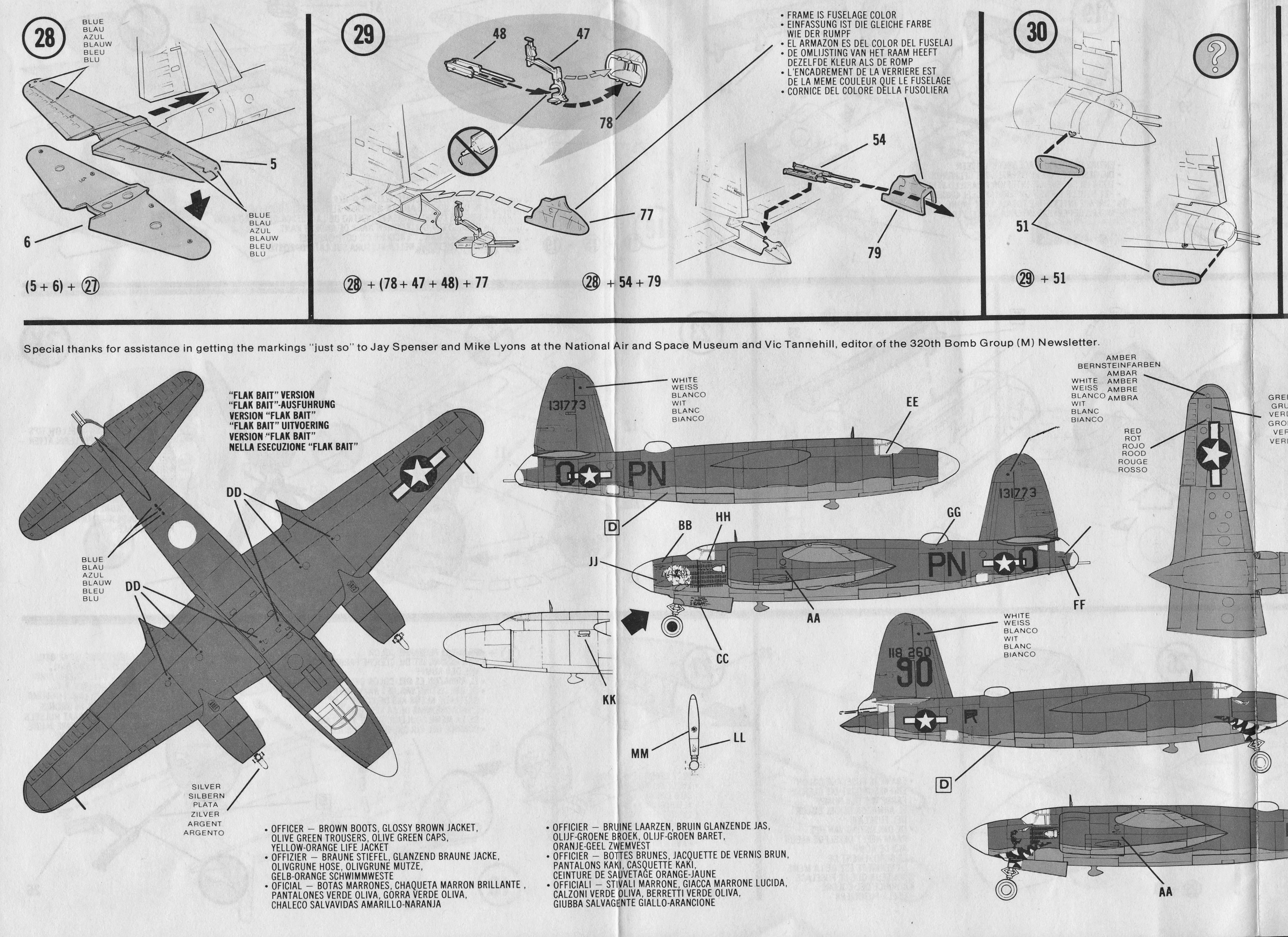
Monogram Martin B-26 Marauder – Instruction sheet

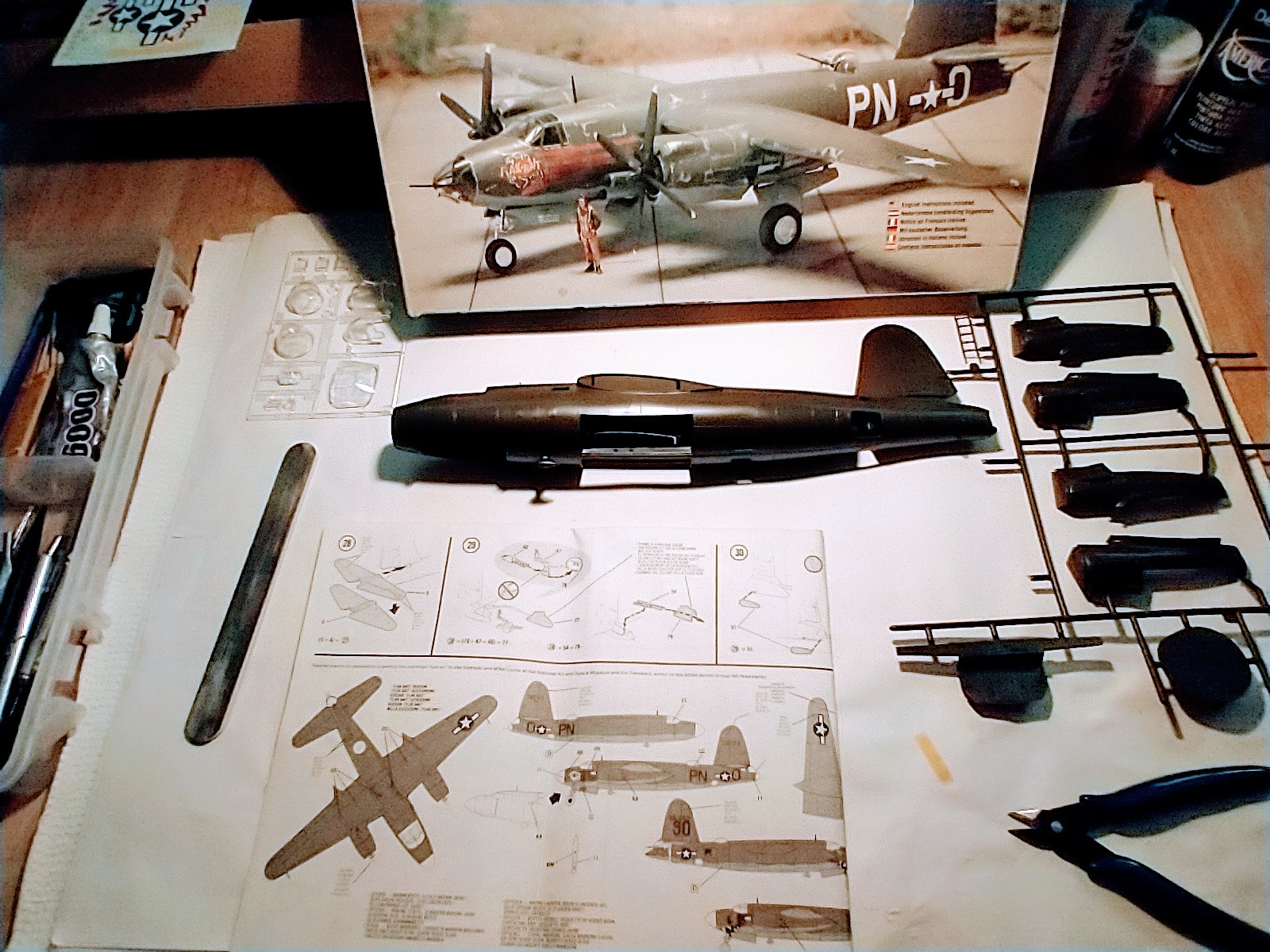
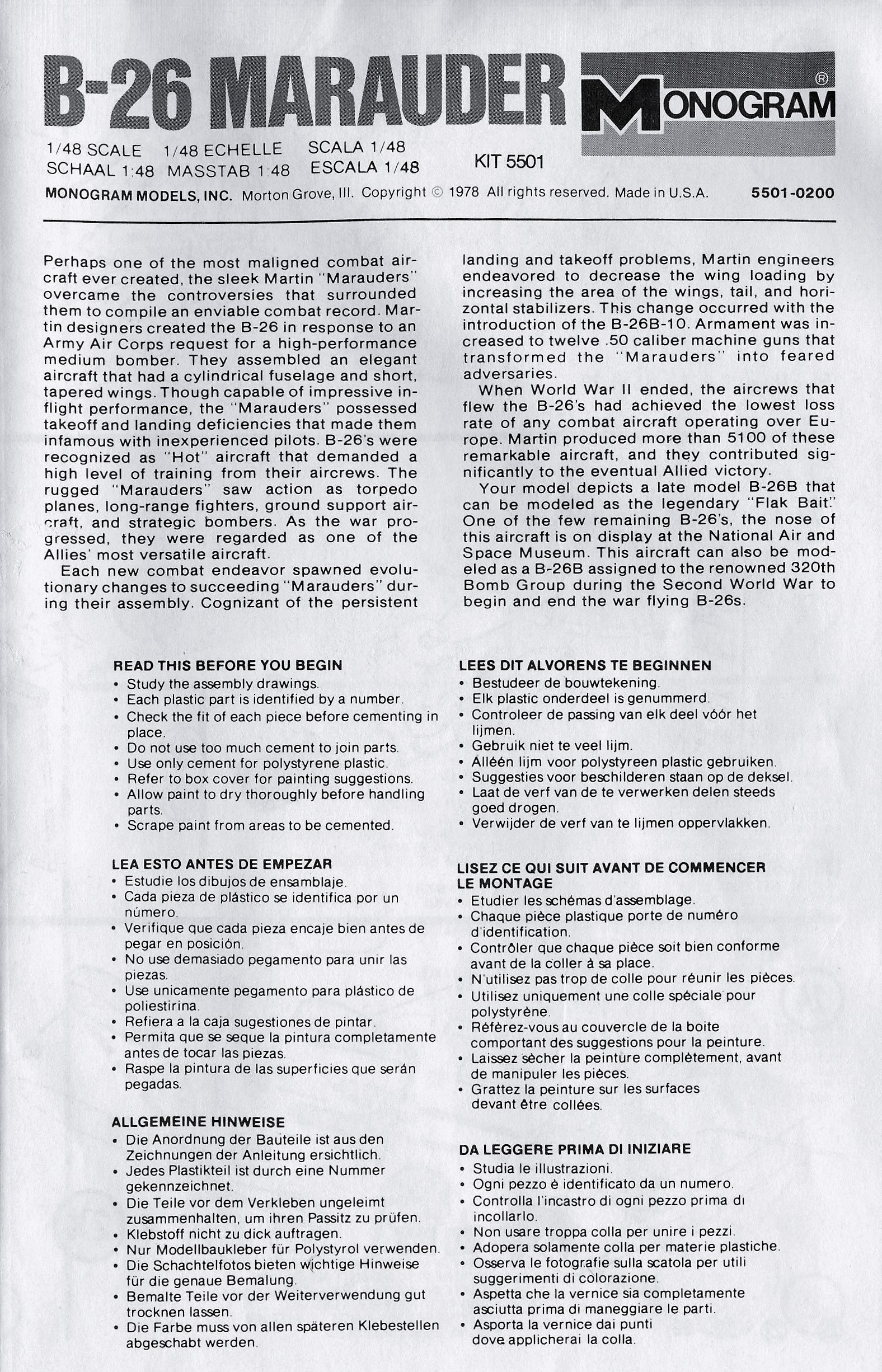
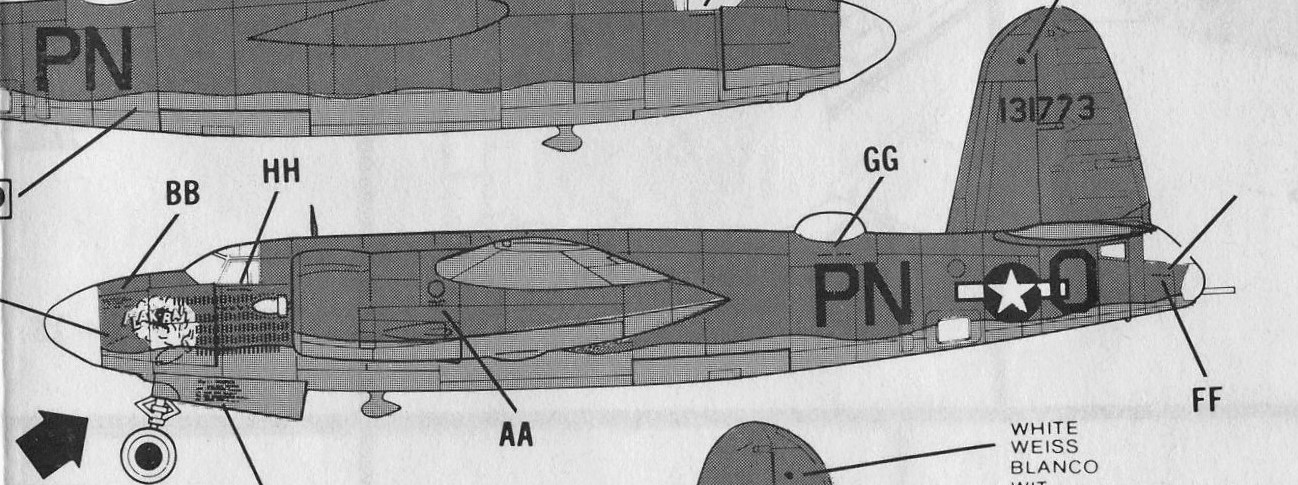
One way I have found to get me going is to scan the instruction sheet.

wp-1626289732649

History

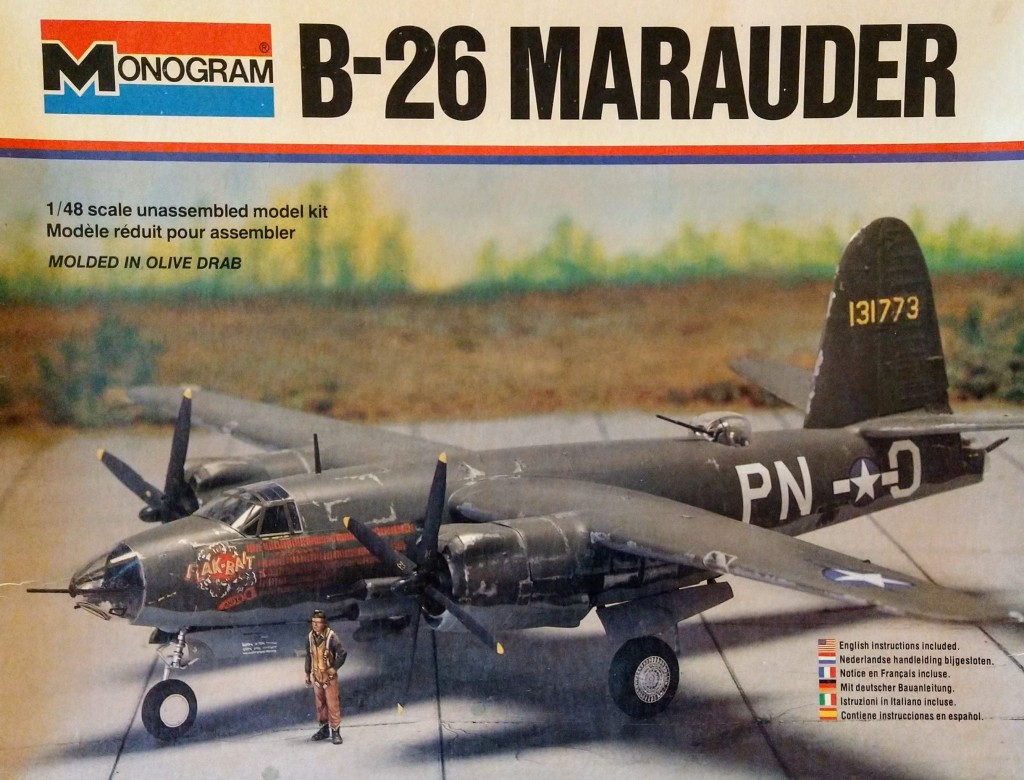
Perhaps one of the most maligned combat aircraft ever created, the sleek Martin “Marauders” overcame the controversies that surrounded them to compile an enviable combat record. Martin designers created the B-26 in response to an Army Air Corps request for a high-performance medium bomber. They assembled an elegant aircraft that had a cylindrical fuselage and short, tapered wings. Though capable of impressive inflight performance, the “Marauders” possessed takeoff and landing deficiencies that made them infamous with inexperienced pilots. B-26s were recognized as “Hot” aircraft that demanded a high level of training from their aircrews. The rugged “Marauders” saw action as torpedo planes, long-range fighters, ground support aircraft, and strategic bombers. As the war progressed, they were regarded as one of the Allies’ most versatile aircraft.

Each new combat endeavor spawned evolutionary changes to succeeding “Marauders” during their assembly. Cognizant of the persistent landing and takeoff problems, Martin engineers endeavored to decrease the wing loading by increasing the areas of the wings, tail, and horizontal stabilizers. This change occurred with the introduction of the B-26B-10. Armament was increased to twelve .50 caliber machine guns that transformed the “Marauders” into feared adversaries.

When World War II ended, the aircrews that flew the B-26s had achieved the lowest Ioss rate of any combat aircraft operating over Europe. Martin produced more than 5100 of these remarkable aircraft, and they contributed significantly to the eventual Allied victory.

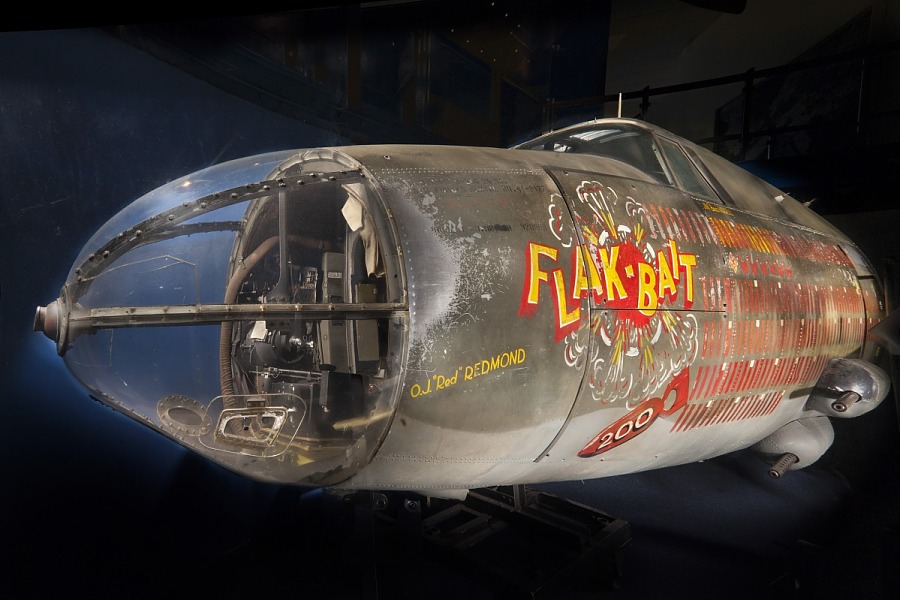
Your model depicts a late model B-26B that can be modeled as the legendary “Flak Bait”. One of the few remaining B-26s, the nose of this aircraft is on display at the National Air and Space Museum.

Martin (Glenn L.) B-26B Marauder (Model 179B) "Flak Bait," NASM
One-half left side, close-up view of Martin B-26B Marauder “Flak-Bait” (A19600297000) as displayed in the World War II Aviation gallery at the Smithsonian National Air and Space Museum’s National Mall Building, Washington, DC

This aircraft can also be modeled as a B-26B assigned to the renowned 320th Bomb Group during the Second World War to begin and end the war flying B-26s.


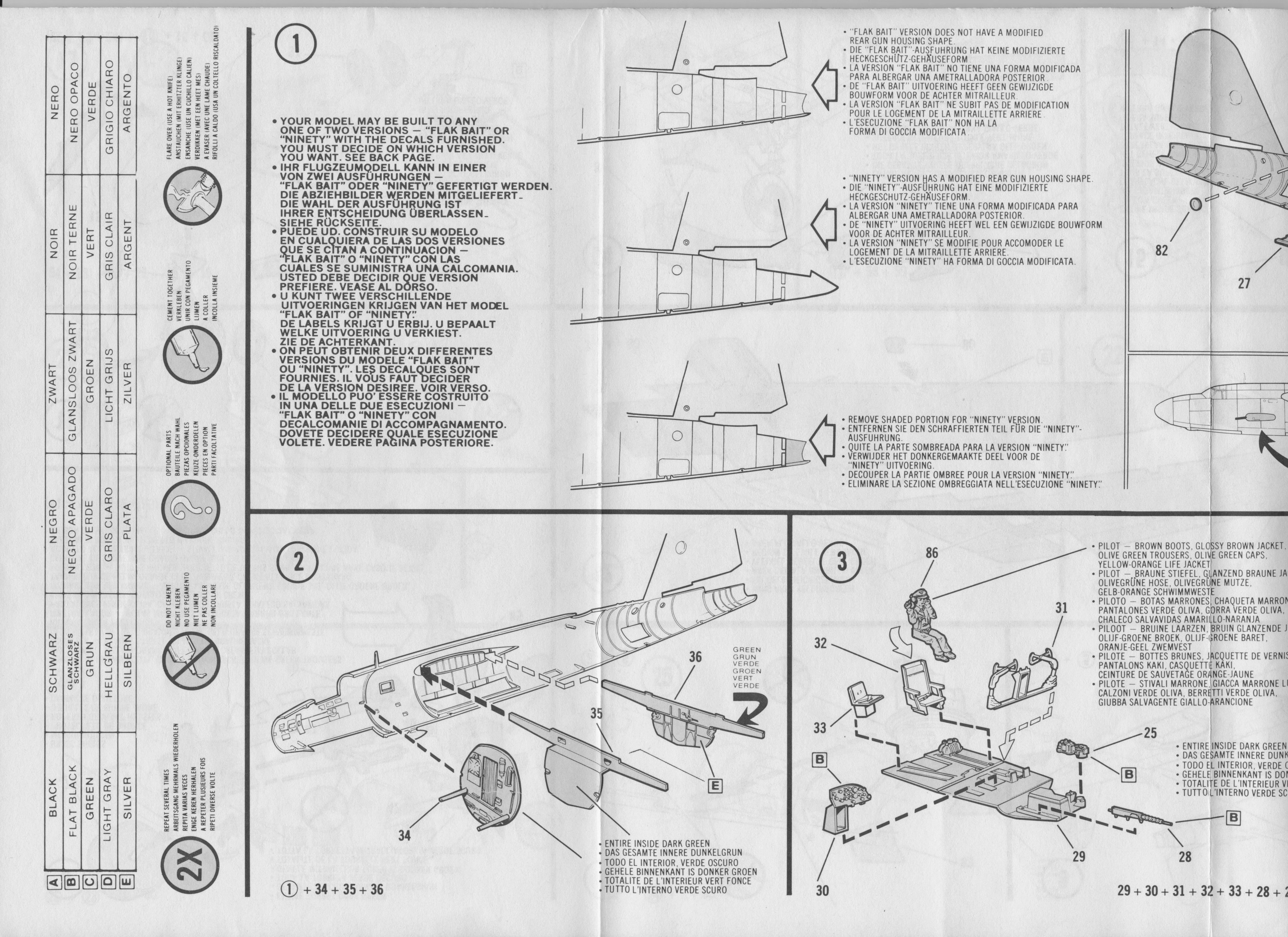
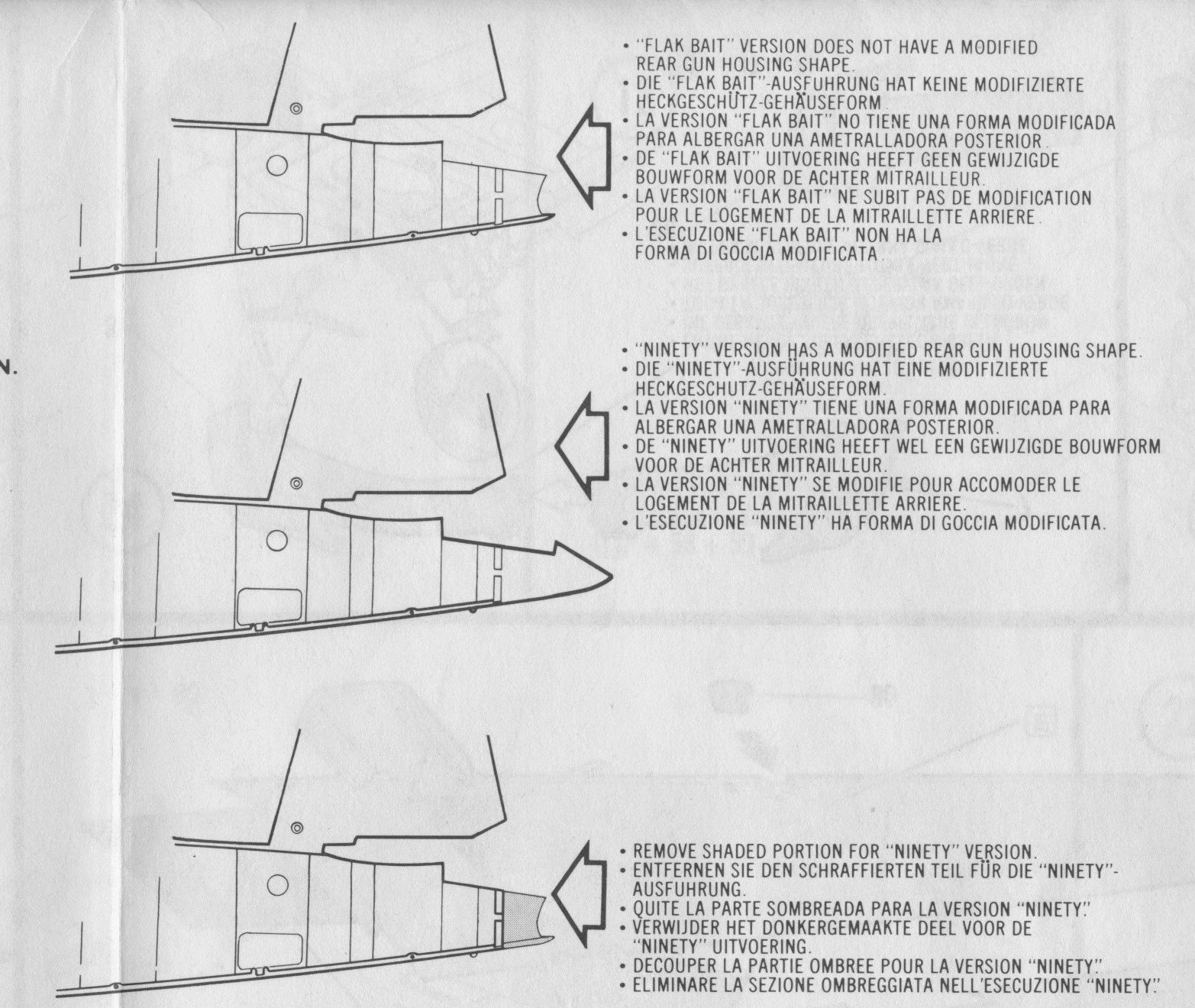
When I scan the instruction sheet I can zoom in on the images and this helps me figure out how to assemble some parts. This is true if I have to cut into the plastic as in step 1.

Numérisation_20210808 (3)

The instructions are still vague but it’s something I am getting to be used to.

To cut or not to cut?

Numérisation_20210808 (11)

Now I get it!

Also I can make sure where every little clear part fits.

Numérisation_20210808 (4)

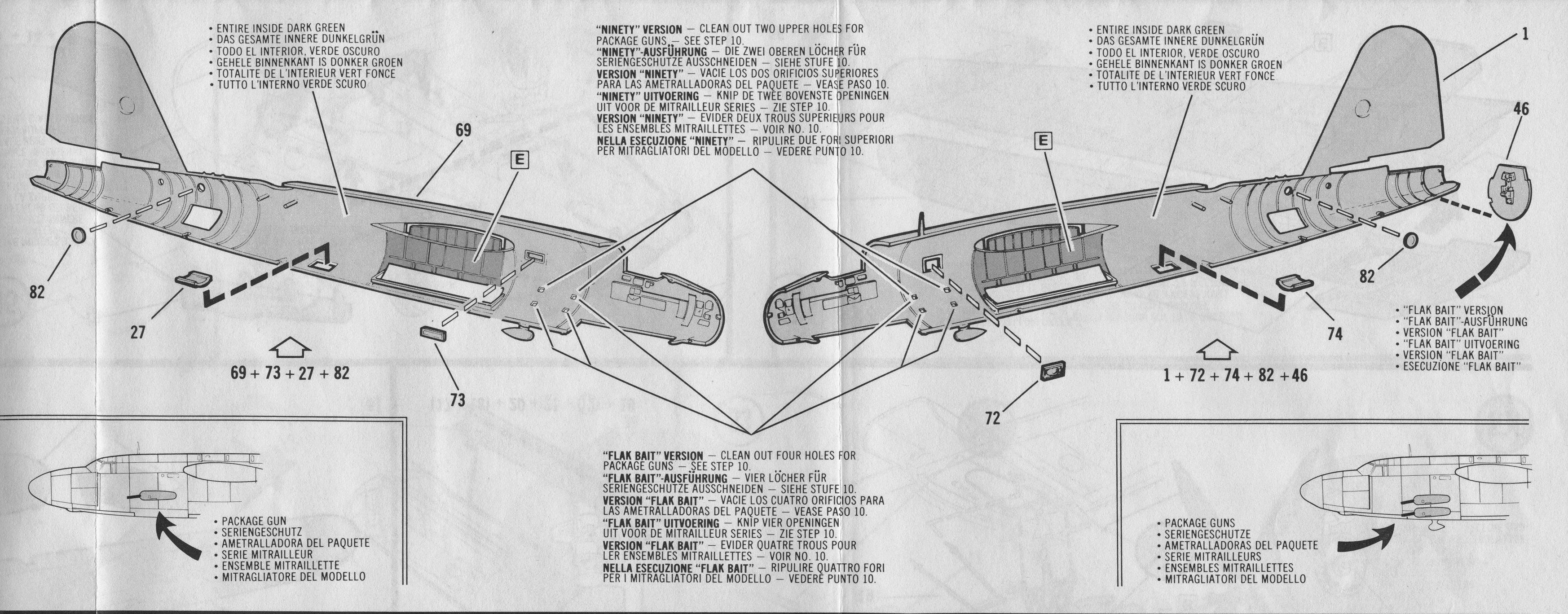
I can check if I have missed something before joining the fuselage halves.

Numérisation_20210808 (5)

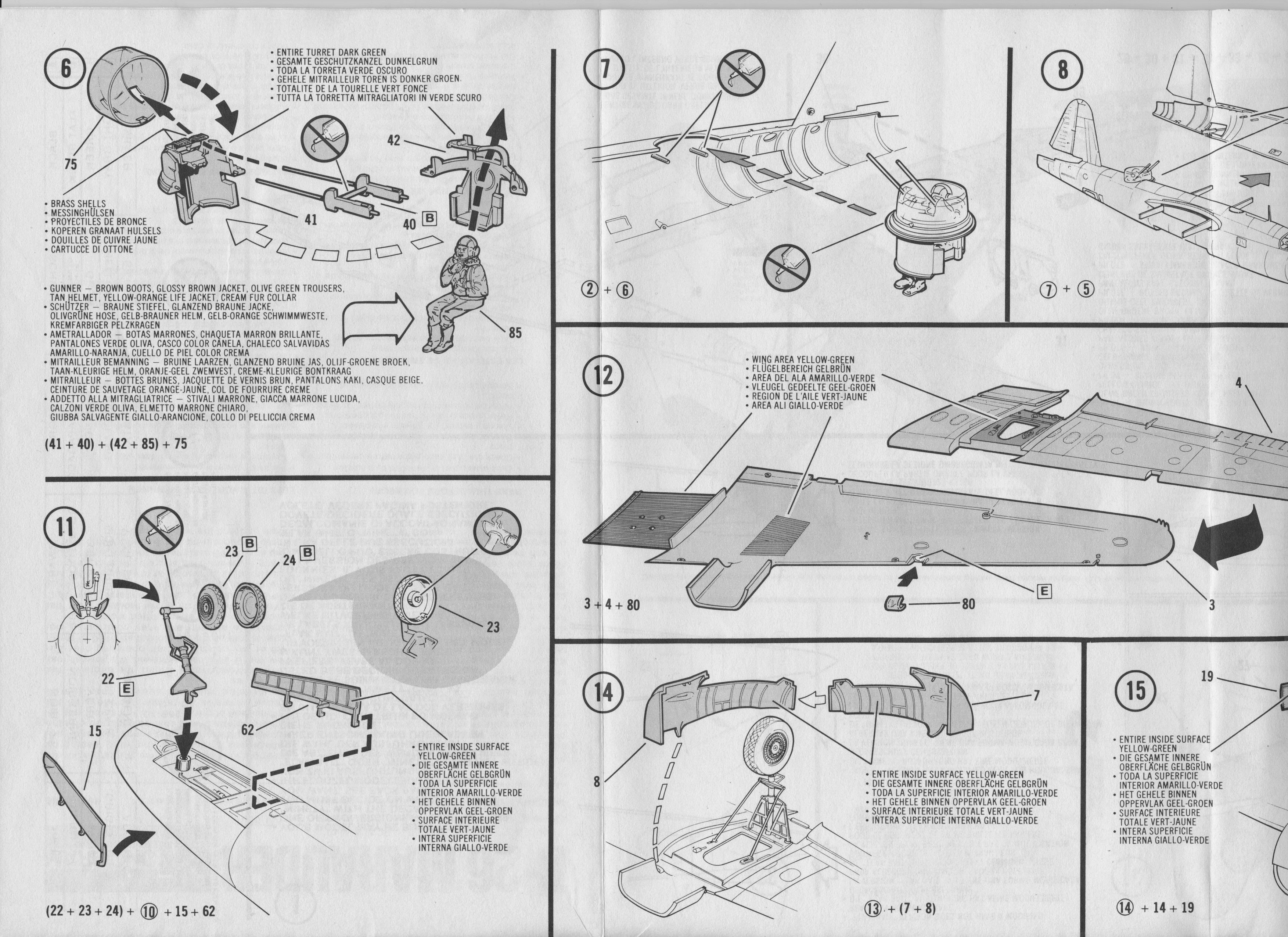
Every step can be challenging if you forget to triple check by dry fitting before glueing.

Numérisation_20210808 (6)

You can also decide not to follow the instructions leaving the wing assemblies for later.

Numérisation_20210808 (7)

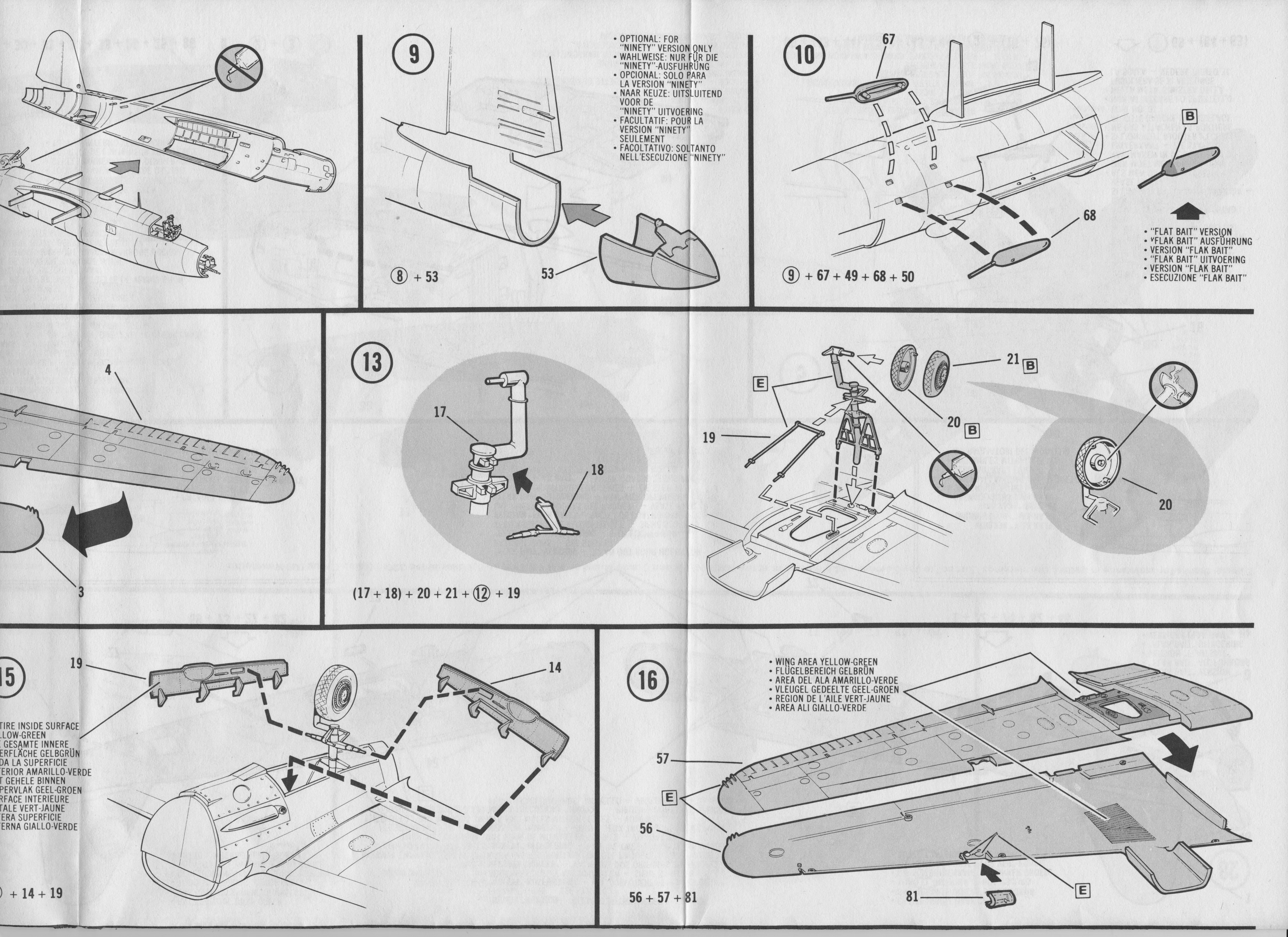
This is something I am now doing making it easier to paint the model kit.

Numérisation_20210808 (8)

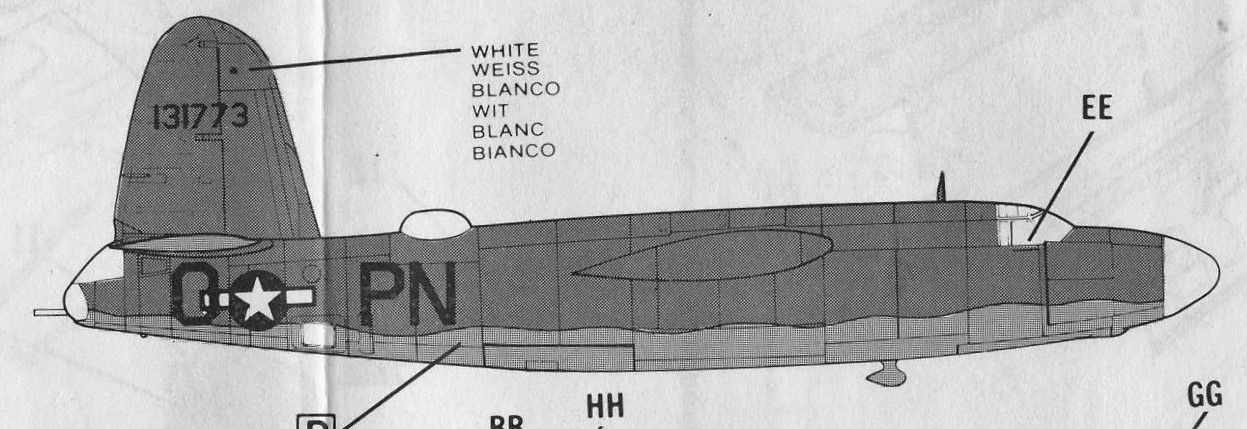
Scanning the instruction sheet allows me also to properly position the decals.

Numérisation_20210808 (2)

Numérisation_20210808 (9)

Numérisation_20210808 (10)

Now how about cleaning that dusty B-25 while I decide when to start…

wp-1628169830602.jpg

Dishwashing soap and lukewarm water…

IMG_20210808_100214728

IMG_20210808_100139904

Oups…Finding a cracked canopy…

IMG_20210808_100149293

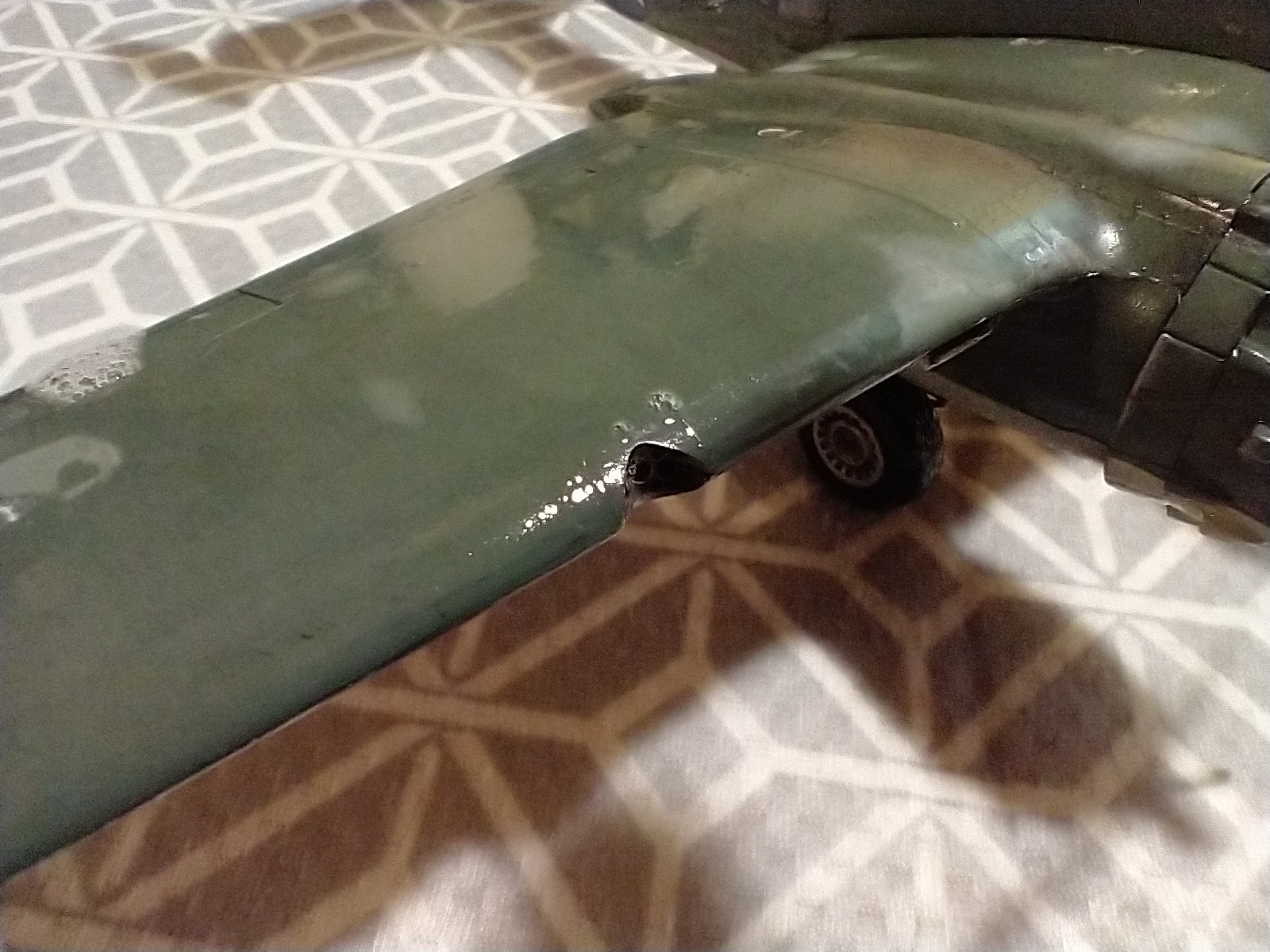
And a missing landing light lens.

IMG_20210808_100201344

I will make a new one.

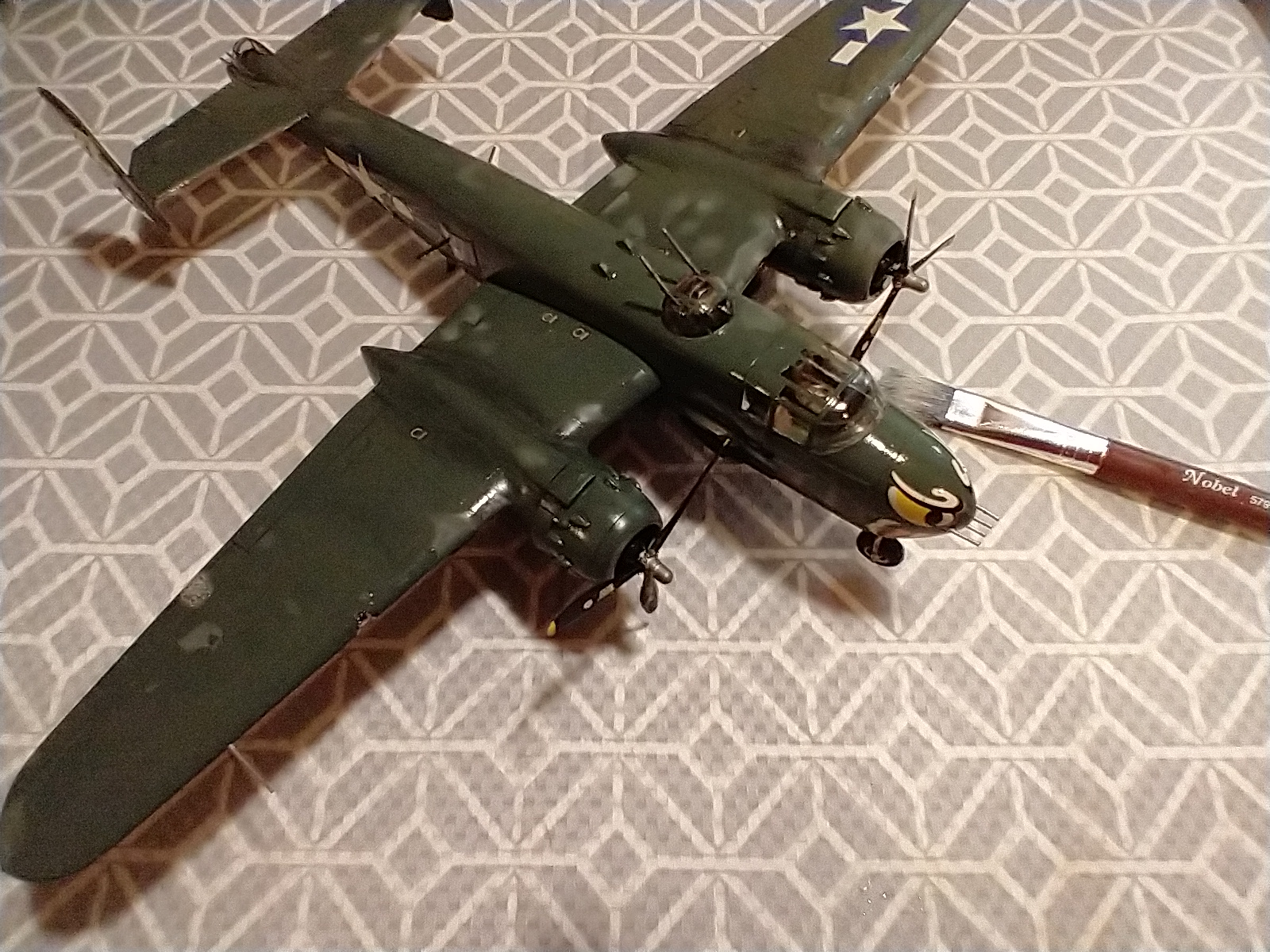
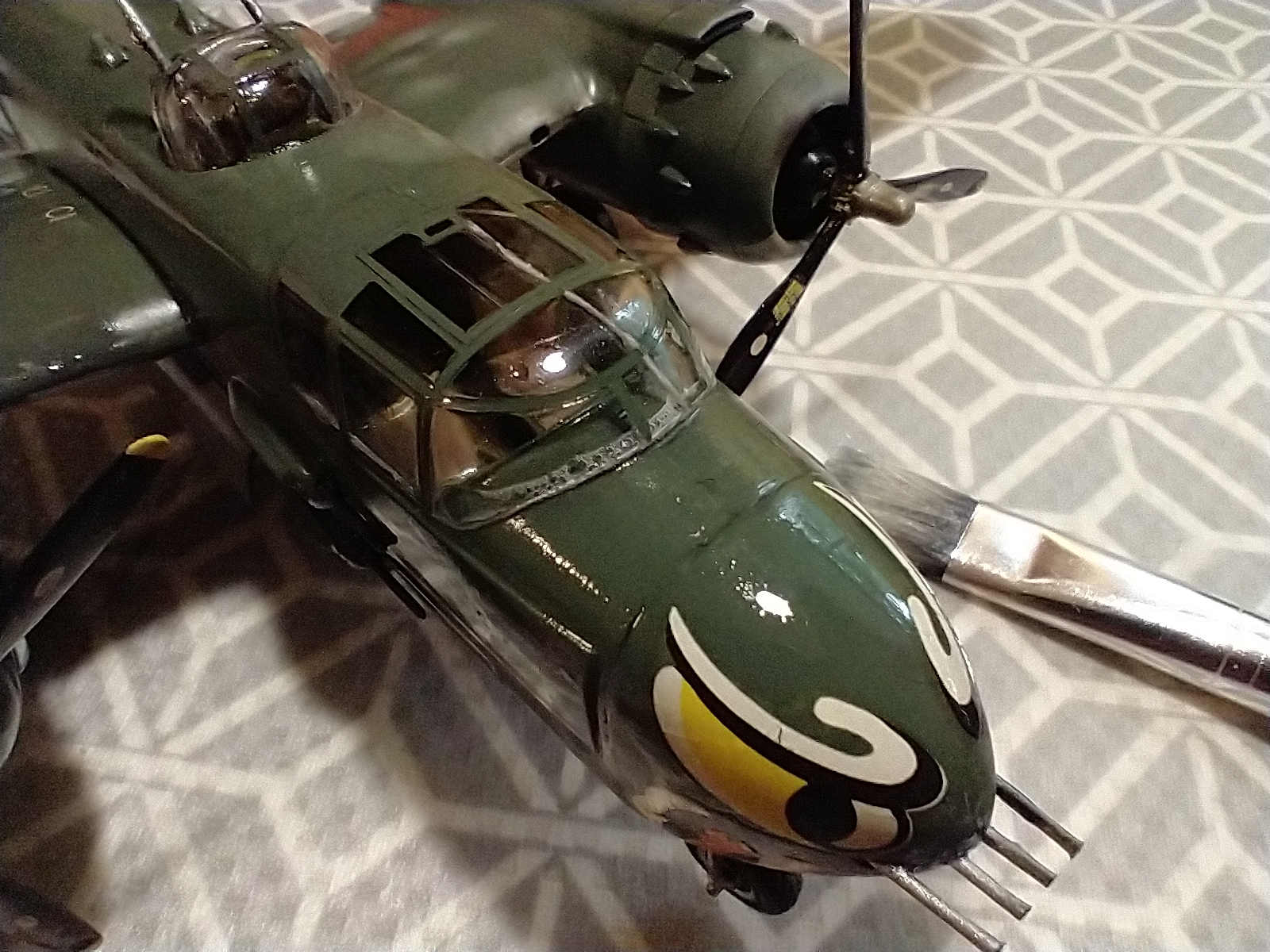
I know which B-26 I will be building…

NASM2015-00230

Intermission – Monogram Martin B-26 Marauder – Marauder at Midway

33BS-22BG-B-26-at-MIDWAY

Source

Marauder at Midway

Impressive painting and story…

Description

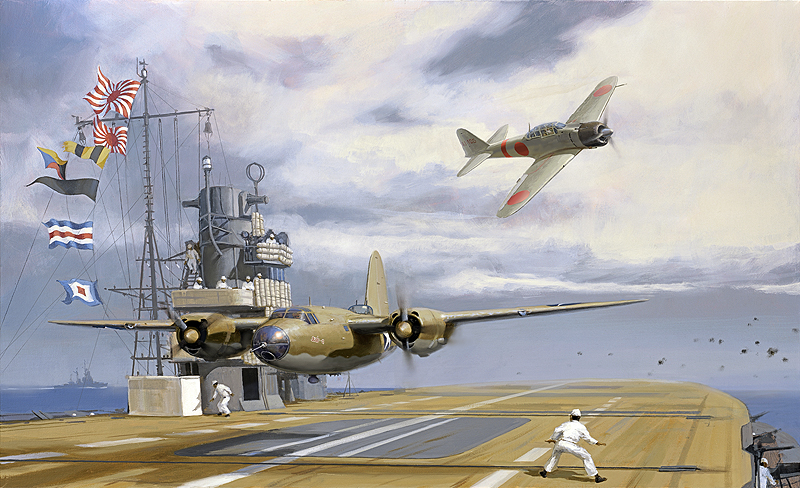
Early on the morning of June 4, 1942, the Japanese Combined Fleet, with four aircraft carriers, was approaching Midway Island in the Central Pacific with the intention of seizing the island. They expected to surprise the Allied base, but due to a broken Japanese code the Allies had advance warning, and sent every available bomber in Hawaii to Midway’s defense. Among this eclectic mix were four B-26 Martin Marauder fast medium bombers, now equipped to carry aerial torpedoes: two from the 22nd Bomb Group and two from the 38th Bomb Group. Navy ships, including two carriers, were also now approaching the scene. But even without the element of surprise, the Japanese had more ships, more carriers, and more aircraft armed to take down opposing ships.

While Midway Island was subjected to a terrific pounding by an initial Japanese air attack, the B-26s participated with Midway-based Navy attack aircraft in a desperate but spirited counterattack on the carriers. The strike ended badly for this American strike force and two of the B-26s were shot down during their target runs. The other two were so badly shot up that they barely made it back to Midway, where they crash-landed and never flew again. While attempting to evade the Akagi’s Zero fighters after releasing his torpedo at the ship, Lt. James Muri of the 408th Bomb Squadron, 22nd Bomb Group, in B-26 #40-1391 SUZIE Q, ended up flying just feet above the Akagi’s flight deck. Vice Admiral Chuichi Nagumo, leader of the Midway assault, witnessed the American counterattack, saw the Marauder fly a few feet above the ship’s deck, and incorrectly surmised that the planes stationed on the island’s airbase were the biggest threat to his precious carriers. Accordingly, he re-armed his force of attack aircraft with ordnance intended to destroy land targets. What Nagumo didn’t realize was that at the moment that Lt. Muri was hurtling down the flight deck of Akagi, mere feet away, two yet undetected US carriers had arrived to engage the Japanese fleet.

The shocking discovery a short time later of US carriers preparing to strike the Japanese fleet forced Nagumo to once again download the ordnance on his waiting planes and reload them for attacking ships. Aside from the breaking of the Japanese code that allowed the US Navy to respond to the Japanese invasion fleet, this fateful decision was responsible, more than anything else, for the US Navy’s stunning victory over the Japanese Naval forces in the Battle of Midway. While the Japanese planes were sitting on the flight decks, busy reloading, the Americans had already launched their attack aircraft. Had the Midway-based attack not been so aggressive, or if Lt. Muri had not so audaciously buzzed the Admiral’s flagship, the Japanese attack aircraft may well have kept their anti-ship ordnance and been in the air when the American carrier attack planes were launched. By the end of the day, all four of the Japanese carriers had been sunk; the USS Yorktown was the only carrier loss suffered by the United States Navy in this battle, which was the turning point in the Pacific war.

Building model airplanes is like taking history lessons and learning more about those who served their country.

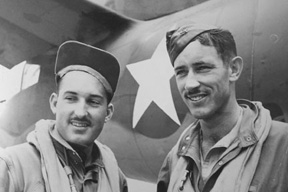
James.Muri.and.Pren.Moore.jpgCrew_of_Lt._James_Muri_with_Martin_B-26_Marauder_at_Midway_in_June_1942.jpg1280px-B-26_Susie-Q.jpg

I had no idea in 1978 that Lt. James Muri had buzzed the Akagi.

What I knew was that Monogram offered two versions of the B-26 with different types of rear turret.

Screenshot_20210806-225022-868

To be continued…

Intermission – Monogram Martin B-26 Marauder – When pausing is not the answer…

Fellow modelers, we are not alone…

There are no rules that say we can’t start another build while waiting to start painting a model kit.

wp-1627296422523..jpg

The Inch High Guy was, and still is, an inspirational modeler with his post Martin B-26 Marauder Part II.

Martin B-26 Marauder Color Photographs Part II – 322nd Bomb Group

I heard the roll call loud and clear…
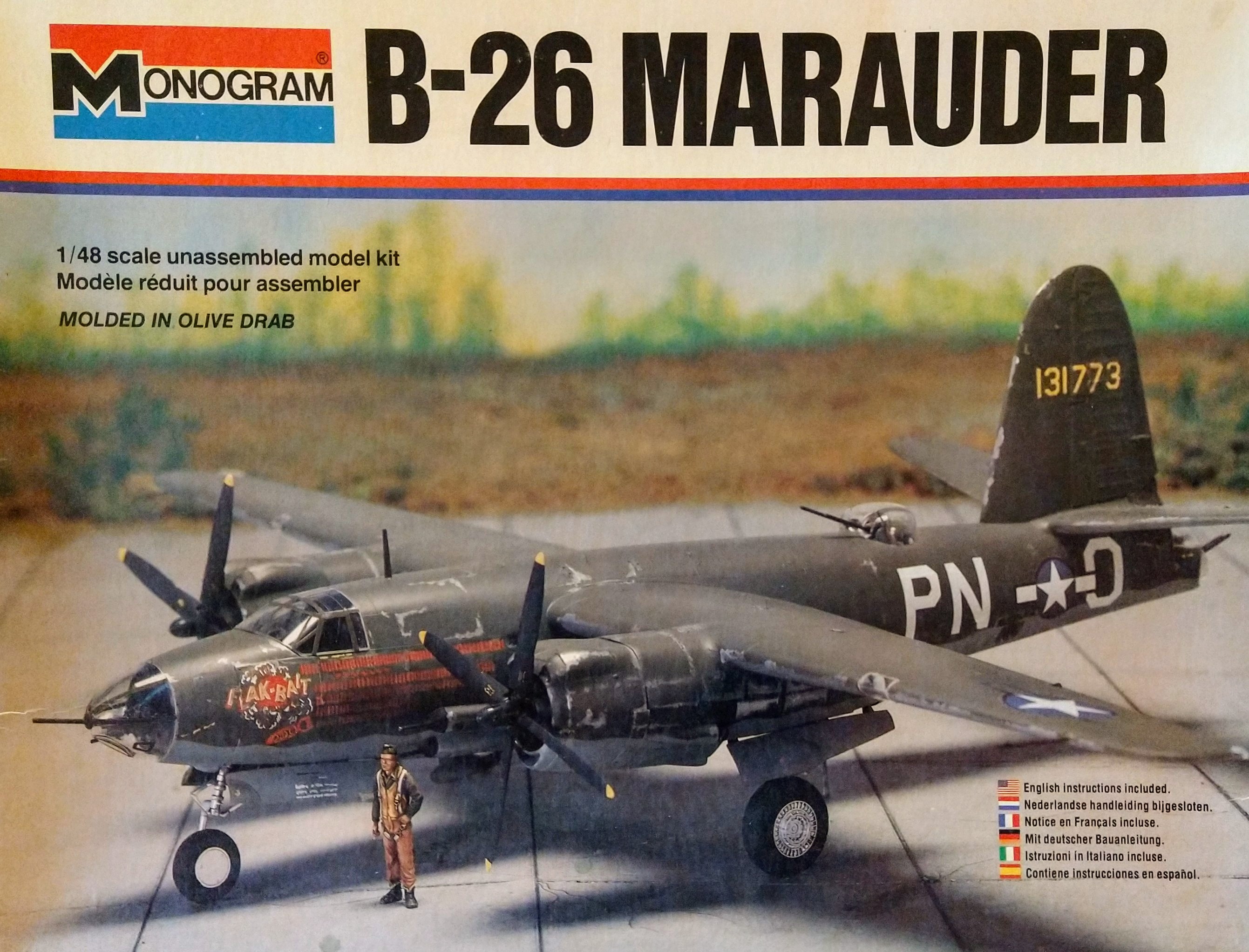
My Monogram B-26 has been waiting much too long in its box since the late 70s.
wp-1626289732649..jpg

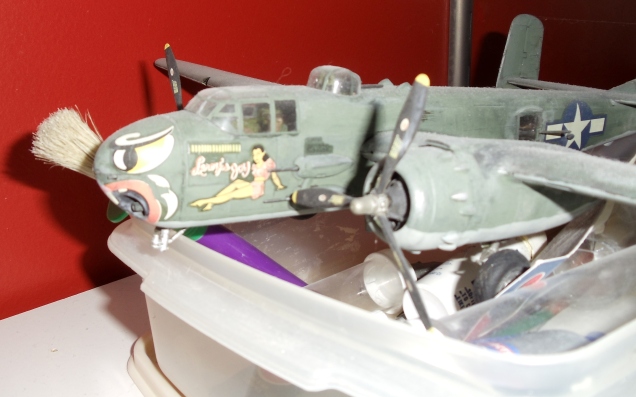
I had bought it because of the B-25 I had bought as a souvenir in 1976 at the Smithsonian National Air and Space Museum in Washington, D.C.
dsc07235

Building my collection is like revisiting the past and enjoying my forgotten hobby. I am also enjoying what other fellow modelers are building and reading how they tackle their builds.

Curtiss P-40E Warhawk — Plane Dave

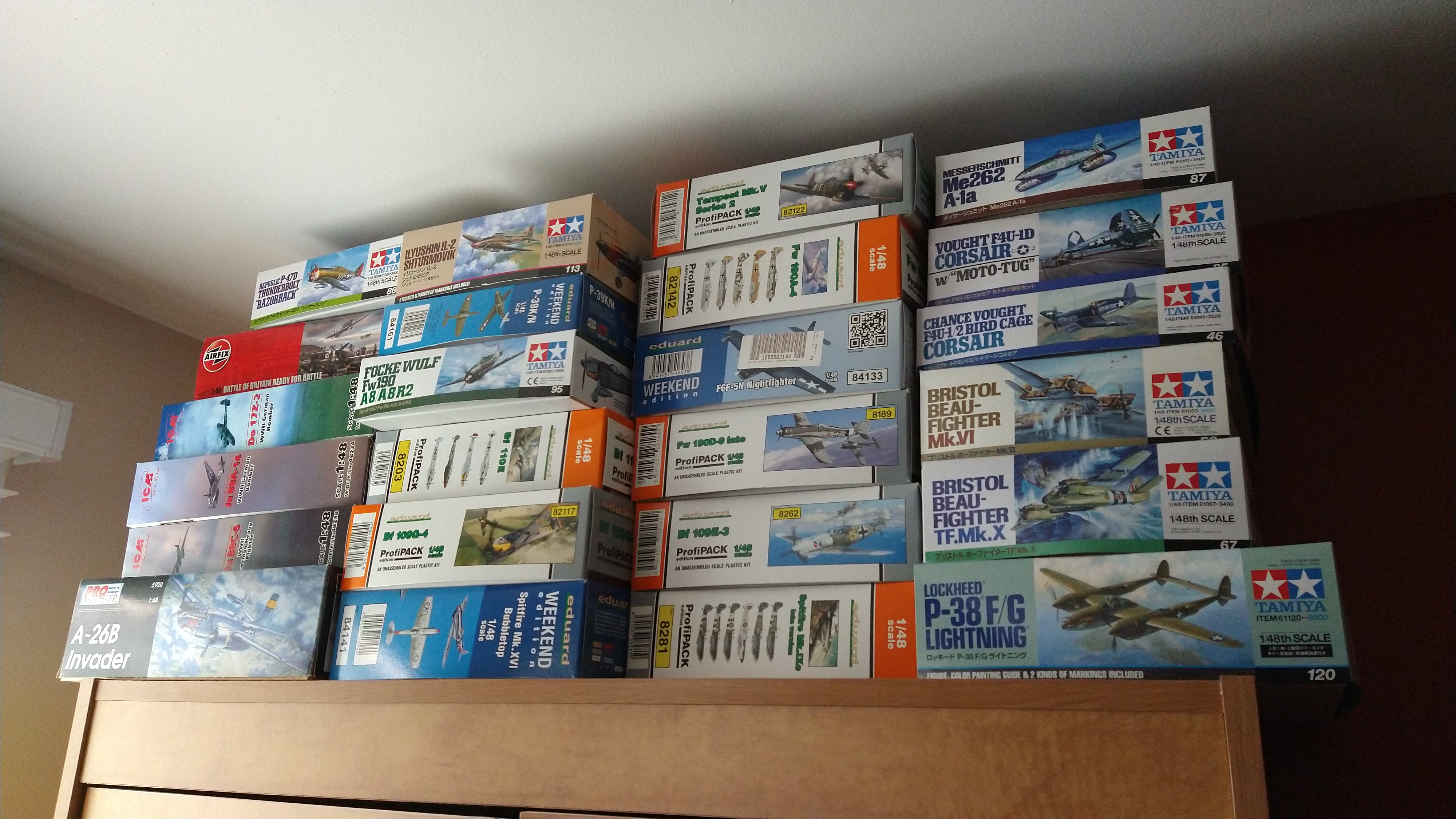
I often reflect upon what I have in my collection of model kits. Those I had bought before the pandemic and that I had desperately tried to find a place to stack them in my home office…
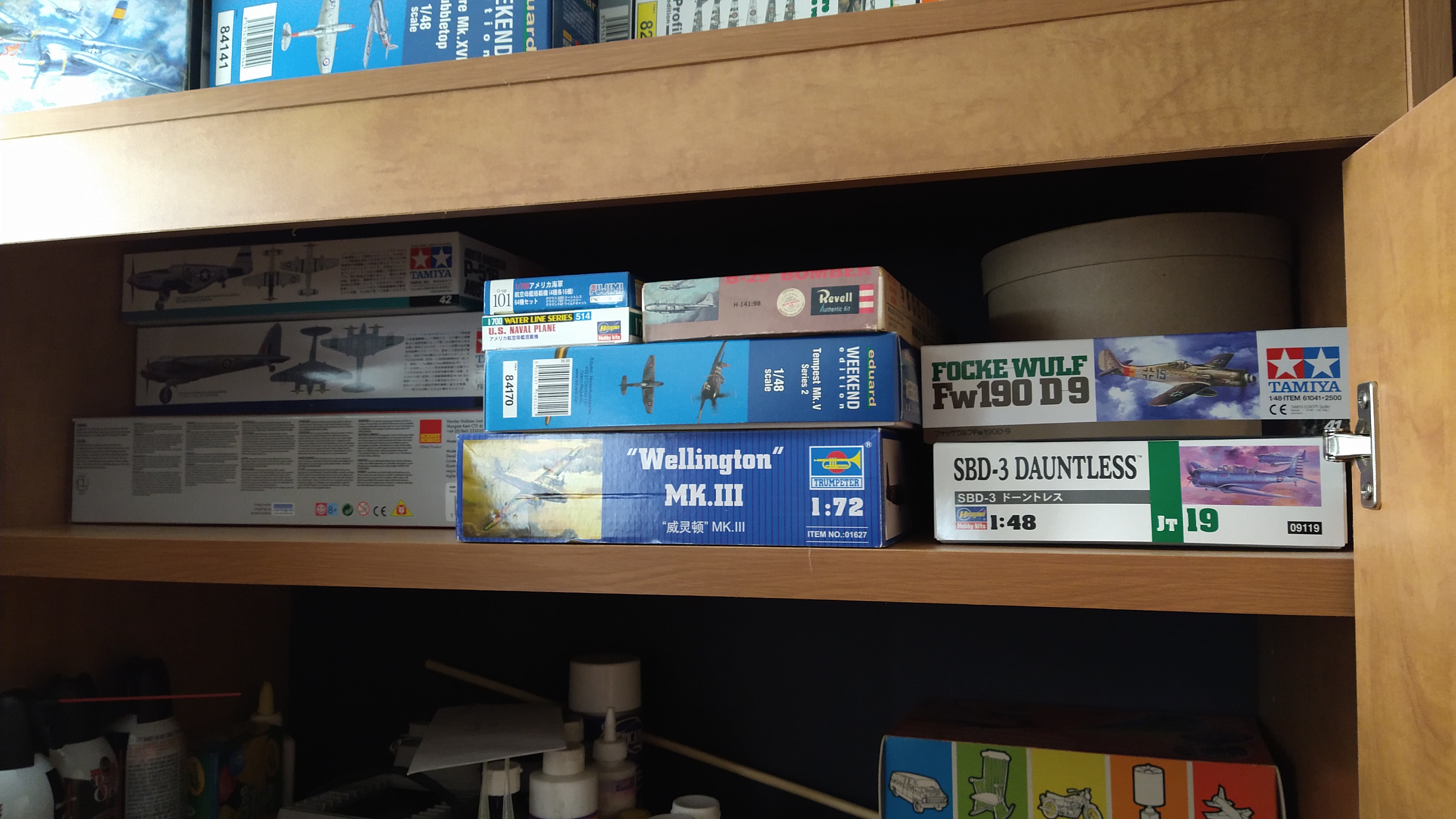
wp-1628079455521.jpg

wp-1628079455486.jpg

wp-1628079455452.jpg

I reflect also upon those I had built  to give as gifts but I still have them…

wp-1628079455412.jpg

Some model airplanes are hanging on a wall.

wp-1628079455345.jpg

I had two more but my grandson took them back. The large ones are on a top shelf and no one wants them.
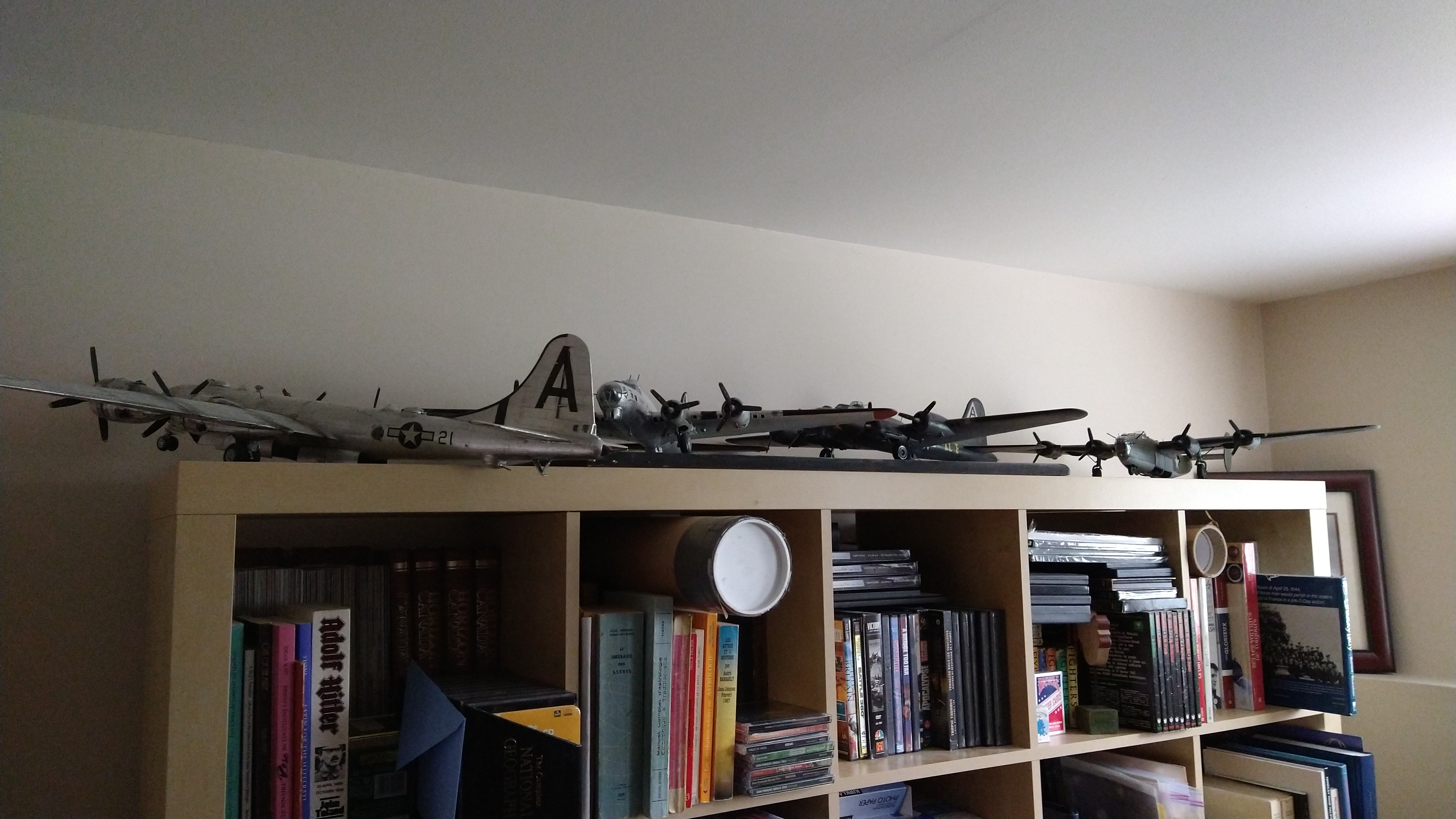
wp-1628079455310.jpg

All are Monogram model kits.

These are hidden in my not so secret vault.. with Revell’s B-1 B at the bottom.
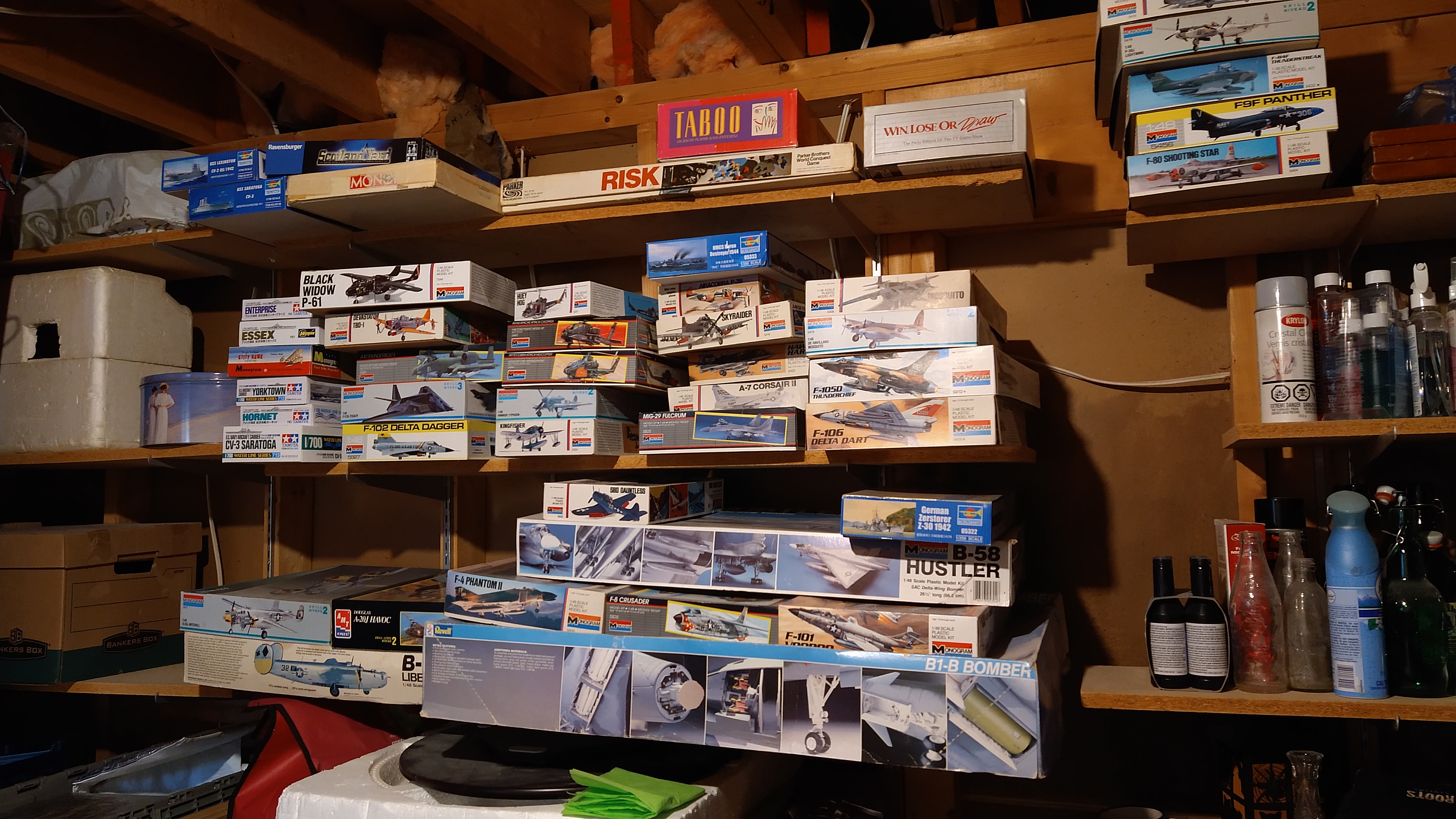
wp-1628079455246.jpg

Every time I look at my collection I can’t figure out a way I will build them especially tackling Eduard and ICM model kits with so many tiny parts and intricate assemblies.

Building model kits has to be first and foremost fun and also about learning the mistakes you have made along the way.
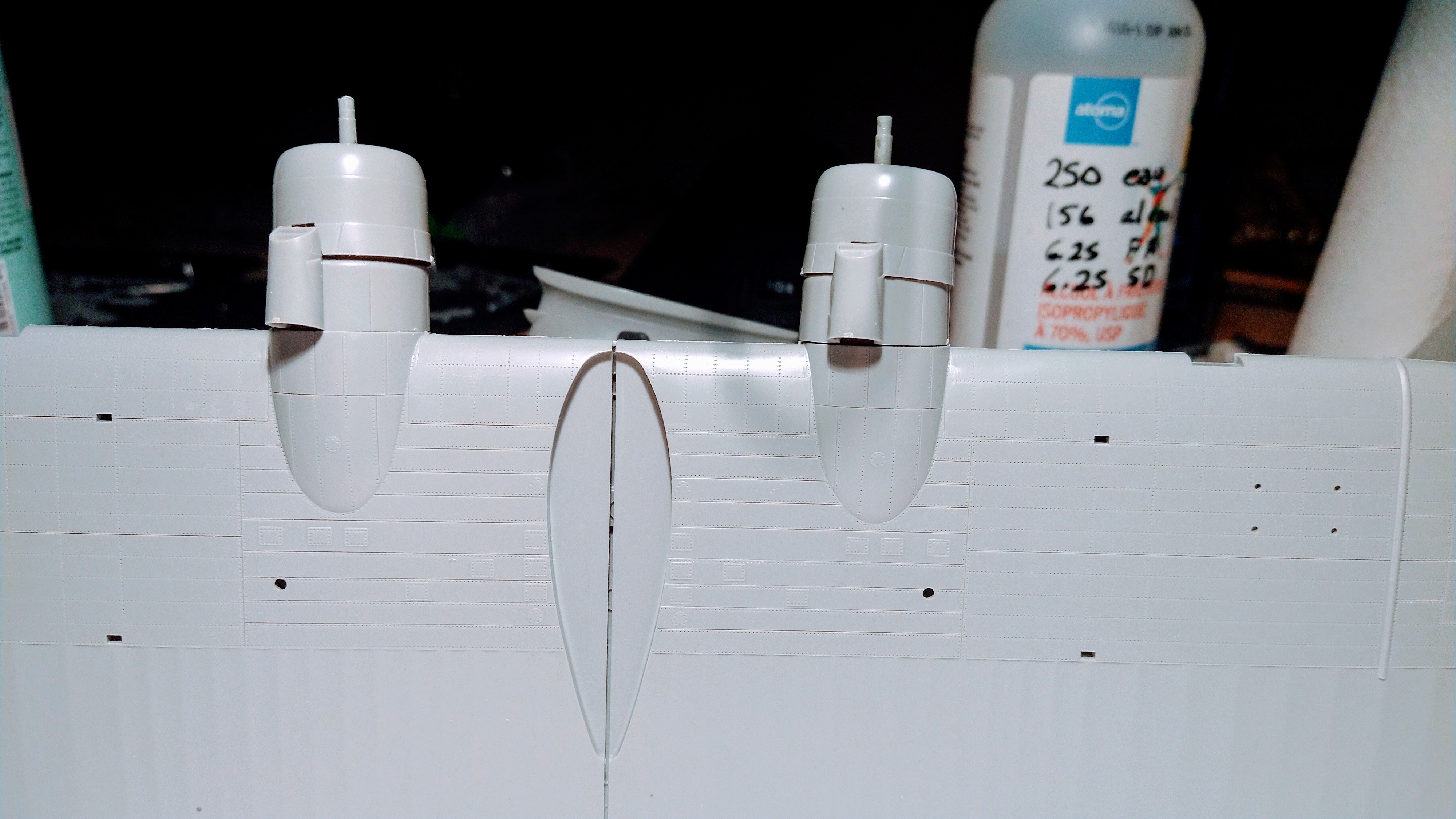
wp-1626743789492..jpg

I have learned not to rush with what I am currently building and that it always takes more time than we are expecting when life gets in the way like this modeler who was also building Monogram’s Catalina…

https://www.britmodeller.com/forums/index.php?/topic/234974257-the-148-catalina-wip-thread-two-for-the-price-of-one/

The tread started like this on January 9, 2015…

It all began when I cleared out the model room over Christmas (not in any way to make space for more kits) and I started to catalogue the kits with the associated after market stuff that I had collected along the way A few larger kits stood out that could be the subjects of longer, more detailed builds and, very tongue-in-cheek, I started the ‘vote for the build you want to see’ thread here.

The Catalina won fair and square and was easily the most popular, so research began and the bits and pieces collected into the one, huge box that holds all 162 parts of nicely moulded, grey plastic. There are many reviews of this kit online but the fact that Squadron awarded the PBY-5 version ‘Kit of the Year’ on its release in 1996 should count towards the fact that this is a very nice kit indeed.

It’s big!! The wingspan is nearly 65cm wide and the fuselage comes out at over 41cm. Below you’ll see a comparison between the fuselage of Revell’s PBY-5A and Tamiya’s 1/48 Lancaster. Ask any enthusiast which was the bigger aircraft and I bet that they’d say the Lancaster by far! It certainly surprised me to see just how big the aircraft really is.

But, and there always seems to be a but in my WIP projects, the aircraft I really wanted to do was the Catalina mk.IVA, JV928 ‘Y’ as flown by Fg. Off. John Alexander Cruickshank VC of No. 210 Squadron RAF, Sullom Voe, Shetland Islands, on the 17th July, 1944.

F/Off. Cruickshank was awarded the Victoria Cross for his actions during the sinking of U-361 commanded by Kptlt. Hans Seidel. Here is the announcement and accompanying citation, published in the London Gazette on 1st September, 1944:

Air Office, 1st September, 1944.

The KING has been graciously pleased to confer the VICTORIA CROSS on the undermentioned officer in recognition of most conspicuous bravery: —

Flying Officer John Alexander CRUICKSHANK (126700), Royal Air Force Volunteer Reserve. No. 210 Squadron.

This officer was the captain and pilot of a Catalina flying boat which was recently engaged on an anti-submarine patrol over northern waters. When a U-boat was sighted on the surface, Flying Officer Cruickshank at once turned to the attack. In the face of fierce anti-aircraft fire he manoeuvred into position and ran in to release his depth charges. Unfortunately they failed to drop.

Flying Officer Cruickshank knew that the failure of this attack had deprived him of the advantage of surprise and that his aircraft offered a good target to the enemy’s determined and now heartened gunners.

Without hesitation, he climbed and turned to come in again. The Catalina was met by intense and accurate fire and was repeatedly hit. The navigator/bomb aimer, was killed. The second pilot and two other members of the crew were injured. Flying Officer Cruickshank was struck in seventy-two places, receiving two serious wounds in the lungs and ten – penetrating wounds in the lower limbs. His aircraft was badly damaged and filled with the fumes of exploding shells. But he did not falter. He pressed home his attack, and released the depth charges himself, straddling the submarine perfectly. The U-boat was sunk.

He then collapsed and the second pilot took over the controls. He recovered shortly afterwards and, though bleeding profusely, insisted on resuming command and retaining it until he was satisfied that the damaged aircraft was under control, that a course had been set for base and that all the necessary signals had been sent. Only then would he consent to receive medical aid and have his wounds attended to. He refused morphia in case it might prevent him from carrying on.

During the next five and a half hours of the return flight he several times lapsed into unconsciousness owing to loss of blood. When he came to his first thought on each occasion was for the safety of his aircraft and crew. The damaged aircraft eventually reached base but it was clear that an immediate landing would be a hazardous task for the wounded and less experienced second pilot. Although able to breathe only with the greatest difficulty, Flying Officer Cruickshank insisted on being carried forward and propped up in the second pilot’s seat. For a full hour, in spite of his agony and ever-increasing weakness, he gave orders as necessary, refusing to allow the aircraft to be brought down until the conditions of light and sea made this possible without undue risk.

With his assistance the aircraft was safely landed on the water. He then directed the taxying and beaching of the aircraft so that it could easily be salvaged. When the medical officer went on board, Flying Officer Cruickshank collapsed and he had to be given a blood transfusion before he could be removed to hospital.

By pressing home the second attack in his gravely wounded condition and continuing his exertions on the return journey with his strength failing all the time, he seriously prejudiced his chance of survival even if the aircraft safely reached its base. Throughout, he set an example of determination, fortitude and devotion to duty in keeping with the highest traditions of the Service.

Later promoted to Flt. Lt. Cruickshank, he was one of only four serving members of RAF Coastal Command who were recipients of the Victoria Cross during WWII; the other three were awarded posthumously.

To learn more about Flight Lieutenant Cruickshank…

https://pbycatalina.com/flying-officer-john-alexander-cruickshank/


About the build started in 2015?

It ended that way…three years later.

June 18, 2018

Well, thanks for reviving this thread! It is still a WIP, but it has not been banished to the cupboard yet. When a build goes in the cupboard it rarely sees the light of day again! At least this is still on the bench!! 

Then three years later…

On July 26, 2021 Mark wrote..

Thanks guys! A massive change in domestic circumstances and a house move have all affected progress, but I will get there! I promise!!

Footnote

How many boxes do you see?

wp-1628079455521.jpg

With a very conservative average price of 50 dollars each, these 24 model airplane kits amount to 1,200 dollars.

Footnote

Monogram B-25 H in a dire need of cleaning…

wp-1628169830646.jpg

wp-1628169830602.jpg

wp-1628169830534.jpg

Post 328 – Monogram 1/48 scale PBY-5 Catalina – The Crew

wp-1625248142587.jpg

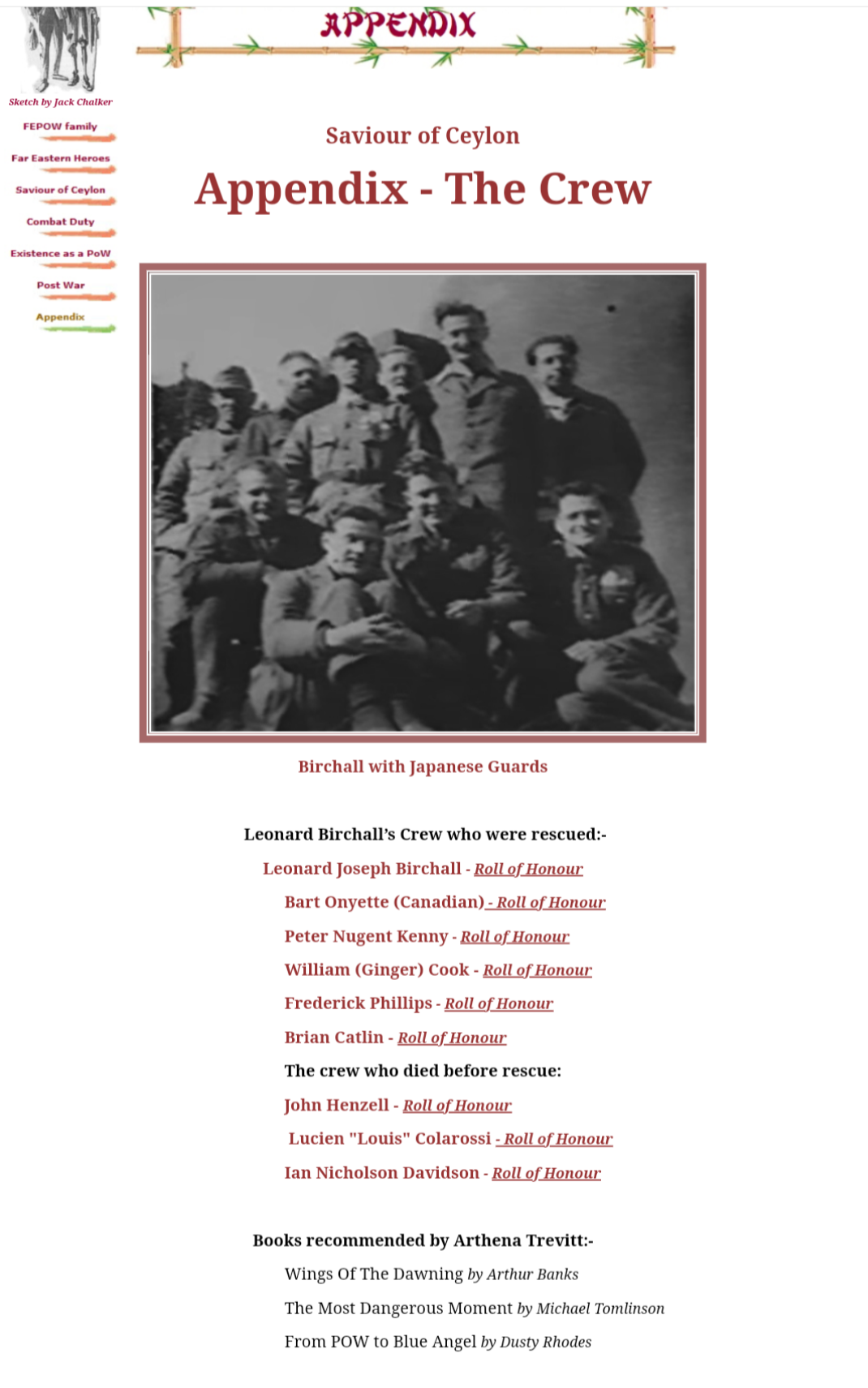
I have at least completed this part of the project. Time for a final homage to the crew. I  felt it was important to search for more information on the crew and not only on Wing Commander Birchall.

Screenshot_20210721-172648-741

The crew is well remembered on this Website, but there are so many more who are remembered on it.

https://www.roll-of-honour.org.uk/

Intermission – Martin B-26 Marauder Color Photographs Part II – 322nd Bomb Group

Definitely my next build…
Jeff Groves's avatarInch High Guy

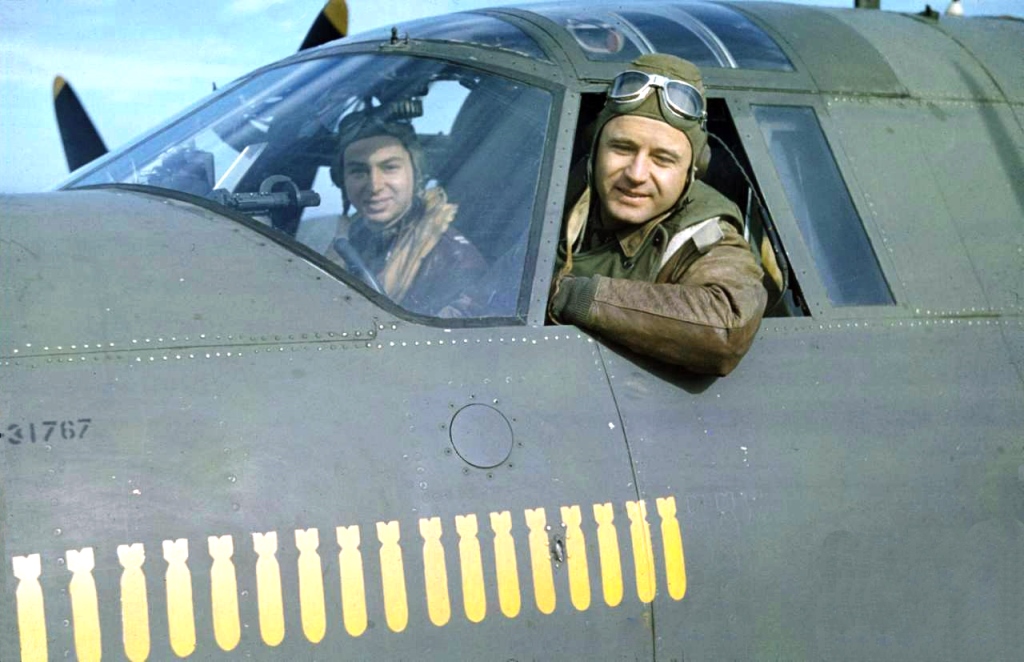
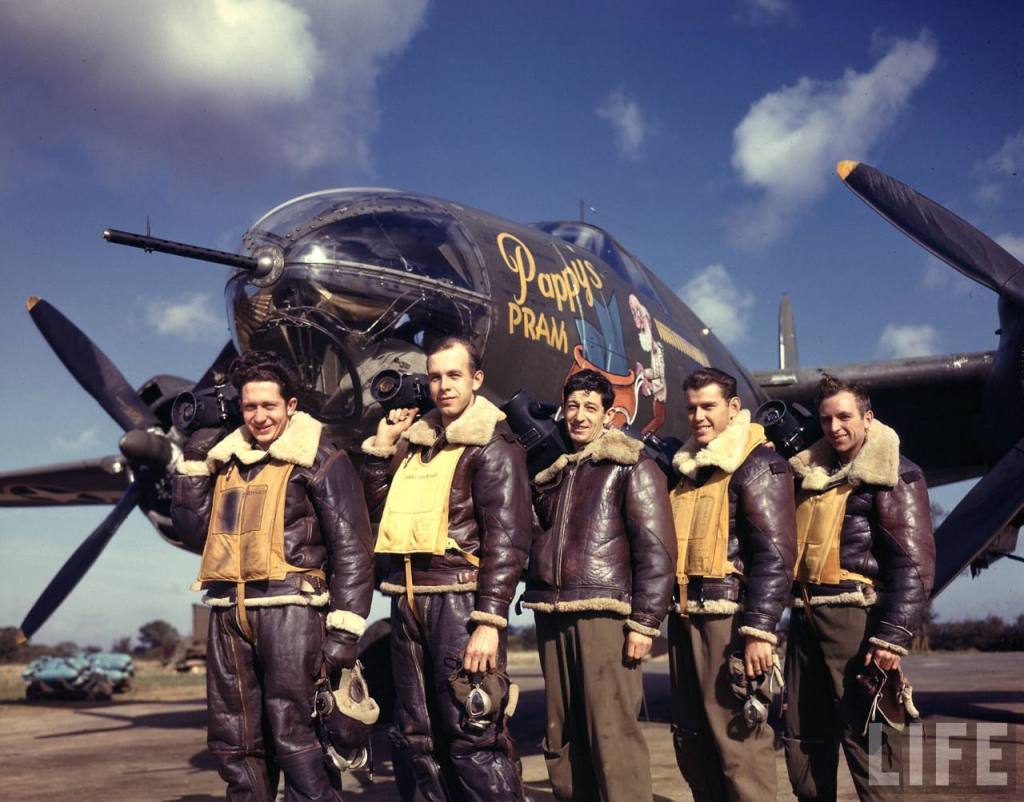
The 322nd Bombardment Squadron (Medium) was composed of the 449th, 450th, 451st, and 452nd Bomb Squadrons. Their initial combat operations were as part of the Eighth Air Force operating from Bury St. Edmonds, England. They operated Martin B-26 B & C Marauders during the spring and summer of 1943, when photographers from LIFE Magazine took these color photographs.

A group shot in flight gear in front of a B-26B of the 450th BS, Pappy’s Pram. This photo shows the USAAF B3 sheepskin jacket to good advantage, along with other details of equipment and gear. Given that all these men are posing with cameras and show no insignia or markings on their gear they may well be the LIFE photographers who took this series of photos.

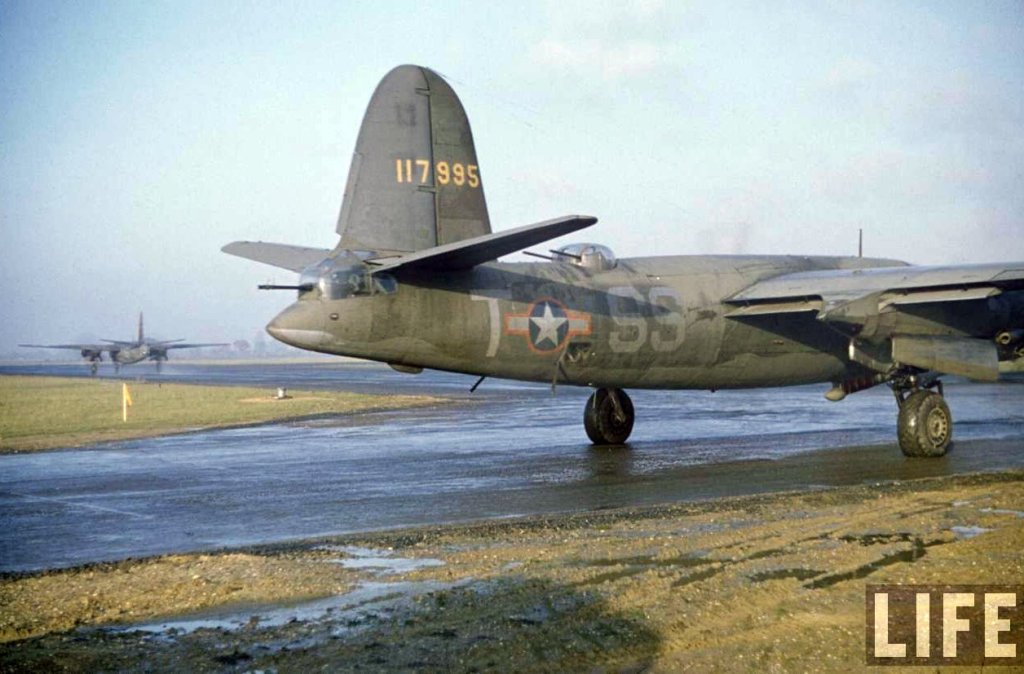
Marauders of the 322ndBG taxiing into take-off position. The red surround to the national insignia was authorized only…

View original post 400 more words